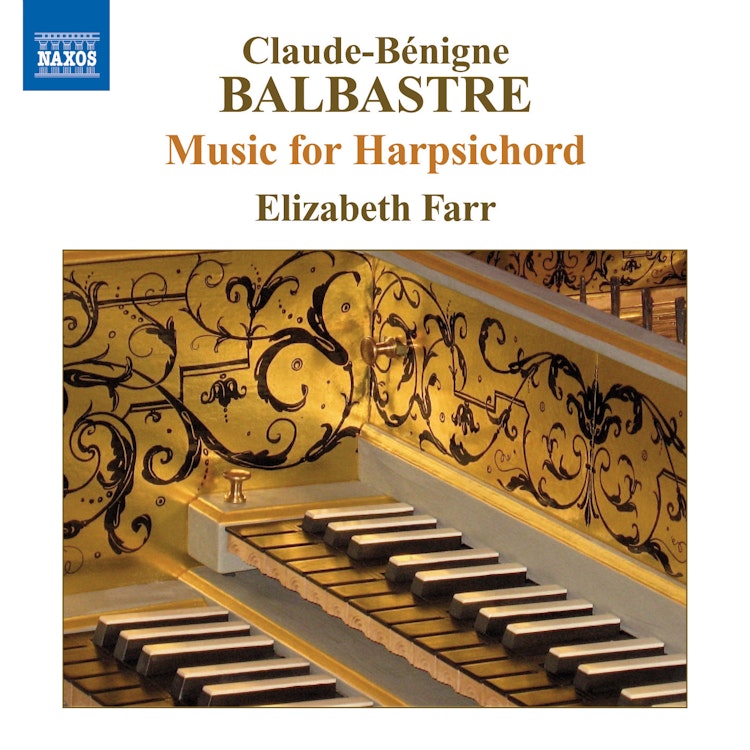
Balbastre's musical legacy combined the strong tradition of French harpsichord music with fashionable new styles influenced by Italian music, such as that of Domenico Scarlatti, and salon music.
Performer Biography
Elizabeth Farr, the performer on this album, specializes in 17th and 18th-century keyboard music and has received awards like the German Record Critics' prize for her previous recordings.
Historical Context
Balbastre's harpsichord pupils included royalty and dignitaries such as Marie-Antoinette, the Duke of Chartres, and the daughters of Thomas Jefferson.
Instruments
This recording uses a large harpsichord with a 16' stop, which is unusual for French harpsichords of Balbastre's time, to enhance the depth and power of his music.
Composer Biography
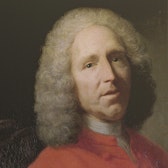
Balbastre studied composition with Jean-Philippe Rameau, a prominent French Baroque composer, and organ with Pierre Février in Paris.
Composer Biography
Claude-Bénigne Balbastre, a celebrated keyboardist and composer, survived the French Revolution despite his association with the aristocracy, but died in poverty ten years later.
Composition History
Balbastre composed patriotic pieces, including the famous Marche des Marseillois et l'Air Ça-ira, which ostensibly embraced the ideals of the French Revolution and helped him avoid prosecution.
You might also enjoy...
Stylus Fantasticus
Harpsichord Recital: Markl, Markus - Couperin, F. / Marchand, L. / D'Anglebert, J.H. / Bach, J.S.
Avec discrétion
Fitzwilliam Virginal Book, Vol. 5
The Golden Age of Harpsichord Music
Froberger: 23 Suites for Harpsichord, Tombeau & Lamentation
Bach & Rameau
Bach & l'Italie
J.S. Bach: Keyboard Works
Fischer: Musical Parnassus, Vol. 2
Bach, J.S.: Harpsichord Works - Suites, Bwv 818A, 823 / 4 Duets / Fantasia On A Rondo / Preludes / Sonata