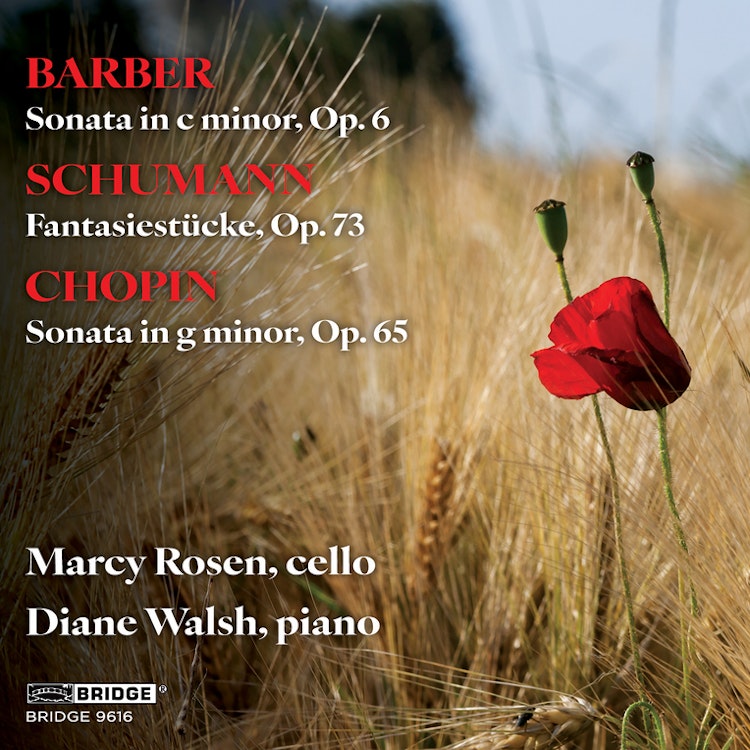
Barber, Schumann & Chopin: Music for Cello and Piano
11/7/2025, 10 Tracks, 55:28
Featuring
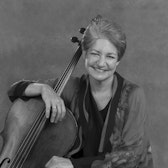
Marcy Rosen
Diane Walsh
Samuel Barber
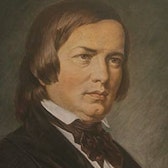
Robert Schumann
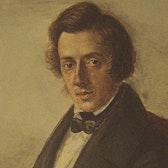
Frédéric Chopin
Did you know?
1/7
Composer's Artistic Vision
Samuel Barber's training as a singer deeply influenced the colors and phrasing in his music, which performer Marcy Rosen believes is key to understanding his works.
Composition History
Samuel Barber collaborated closely with cellist Orlando Cole, who later became the performer Marcy Rosen's teacher, while writing his Cello Sonata, and they premiered the work together in 1933.
Composer Biography
Samuel Barber, an American composer, pianist, and baritone, was a child prodigy who began his studies at the Curtis Institute of Music at age 14.
Composer's Artistic Vision
Robert Schumann changed the title of his Op. 73 from 'Soirée Pieces' to 'Fantasy Pieces' to give interpreters more imaginative freedom, and indicated it could be played on violin, cello, or clarinet.
Composition History
Frédéric Chopin struggled for several years to revise his Cello and Piano Sonata in G minor, Op. 65, which he finally offered to his German publisher in June 1847.
Composition History
Samuel Barber's Cello Sonata in c minor, Op. 6, was written in 1932 while he was studying at the Curtis Institute of Music.
Historical Context
Robert Schumann composed his Fantasiestücke, Op. 73, in just two days in early 1849, during a period of revolutionary tumult and violence in Germany.
You might also enjoy...
Poulenc, Janáček & Rachmaninoff: Chamber Works
Unexpected Songs
Cello Sonatas of 1948
Popper, D.: Suite for Cello and Piano / 3 Pieces / Im Walde / Piatigorsky, G.: Variations On A Theme of Paganini