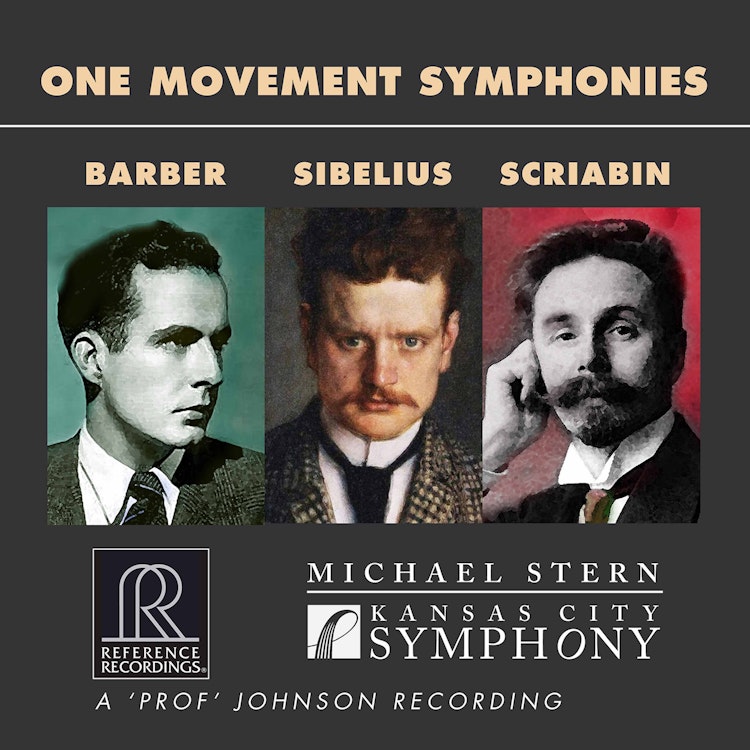
Barber, Sibelius & Scriabin: One Movement Symphonies
5/28/2021, 3 Tracks, 1:02:33
Featuring
Michael Stern
Kansas City Symphony
Samuel Barber
Jean Sibelius
Alexander Scriabin
Did you know?
1/7
Composition History
Sibelius's Symphony No. 7 was initially premiered in Stockholm in 1924 under the title Fantasia sinfonica No. 1, a 'symphonic fantasy,' before being published as Symphony No. 7 in one movement.
Composer Biography
Samuel Barber, an American composer, achieved overnight fame in 1938 when Arturo Toscanini conducted the NBC Symphony Orchestra in his Essay for Orchestra No. 1 and Adagio for Strings.
Compositional Technique
Barber's First Symphony, though in one continuous movement, is a 'synthetic treatment' of the four-movement classical symphony, based on three themes that retain their fundamental character throughout.
Composer's Artistic Vision
Alexander Scriabin, a Russian composer, was deeply interested in mysticism and philosophy, which led to a radical metamorphosis in his compositions and inspired his concept of 'The Mystery,' a synthesis of all arts.
Compositional Technique
Scriabin's The Poem of Ecstasy, a symphonic work, is structured with a Prologue introducing two motives—'Strife After the Ideal' and the 'Ego theme'—which then lead into a sonata form.
Composer's Artistic Vision
Jean Sibelius, Finland's national composer, believed it was his duty to express his love for Finland in his music, which led to works like Kullervo and Finlandia.
Recording & Production
Keith O. Johnson, one of the founders of Reference Recordings, is known for his singular methods and hand-built or modified equipment, contributing to the 'RR Sound' on this album.