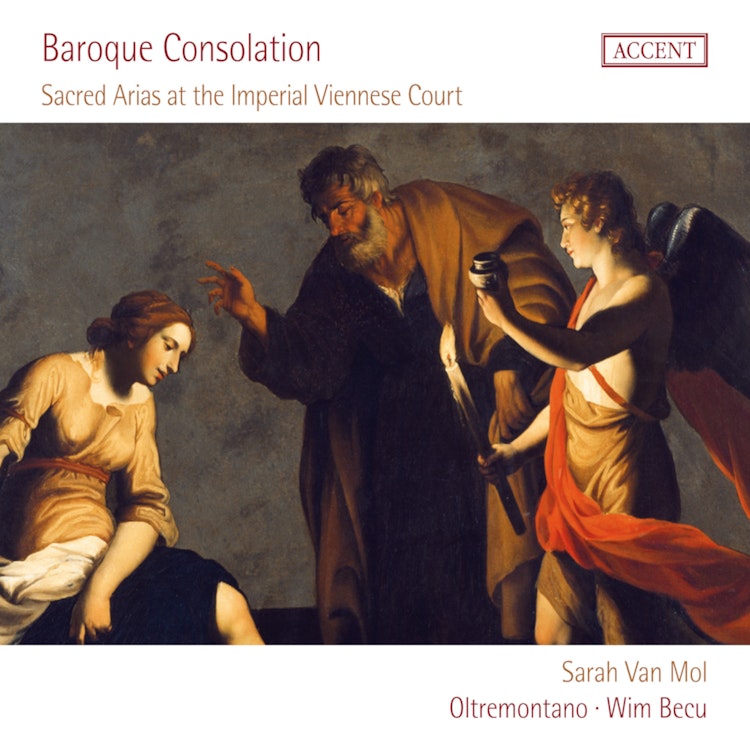
Baroque Consolation: Sacred Arias at the Imperial Viennese Court
4/5/2019, 13 Tracks, 58:03
Featuring
Bart Rodyns
Oltremontano
Francesco Bartolomeo Conti
Johann Joseph Fux
Antonio Caldara
Joseph I
Pietro Andrea Ziani
Georg Muffat
Marc' Antonio Ziani
Johann Jakob Froberger
Johann Pachelbel
Did you know?
1/7
Historical Context
During this period, Vienna's artistic inspiration primarily came from Italy, with Italian poets, painters, architects, and musicians being highly sought after at the Habsburg court.
Composition History
Emperor Joseph I, son of Leopold I, composed the aria 'Alme ingrate' with a lively trombone obbligato, intended as a 'substitution aria' for an untitled sepolcro (a sacred dramatic work) by another unknown composer.
Recording & Production
The album features two organs: the 'Zilveren Orgel' by J. B. Forceville (1660-1739) from Broechem for solo organ pieces, and an organ by Jos Moors (2013) from Herentals for ensemble recordings.
Historical Context
In the late 17th and early 18th centuries, Vienna experienced significant economic prosperity after the lifting of the siege of Vienna in 1683 and the defeat of Turkish forces in Buda in 1686.
Compositional Technique
The trombone, despite being little known elsewhere, flourished in Vienna and the Habsburg lands, holding strong religious connotations for composers and featuring in over forty sacred dramatic works with florid obbligato parts between the 1680s and 1740s.
Performer Biography
Wim Becu, the artistic director of Oltremontano, has performed with prestigious musicians like Philippe Herreweghe and Gustav Leonhardt, and has recorded over 200 CDs.
Historical Context
Italians dominated the position of court Kapellmeister (music director) at the Habsburg court from 1619 to 1715, with only one short interruption.
You might also enjoy...
Fairy Tale
Hans Haug & Mario Castelnuovo-Tedesco: Chamber Works
Habe deine Lust an dem Herren
Timothy Reynish Live in Concert, Vol. 2
25 Years of Collegium Novum Zürich (Live)
The Next Step
Clarinet Concerto - Sinfonie Concertante
La notte d'amore
Du Temps & De L'Instant
Beigbeder: Música de cámara
Cazzati: Vespro di Sant'Andrea
Dreams & Landscapes
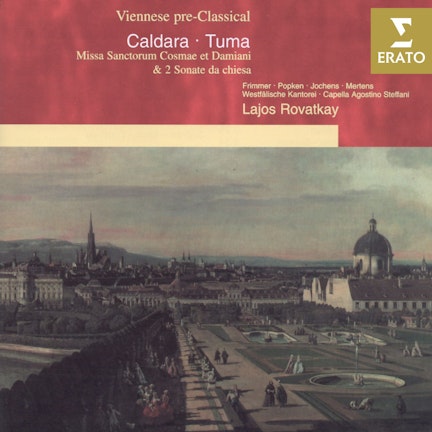
Caldara: Missa Sanctorum Etc.
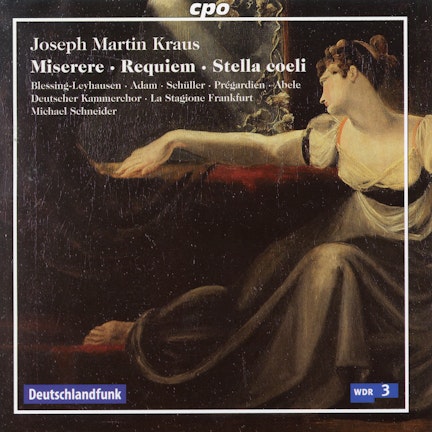
Kraus: Miserere in C Minor, Requiem in D Minor & Stella coeli in C Major