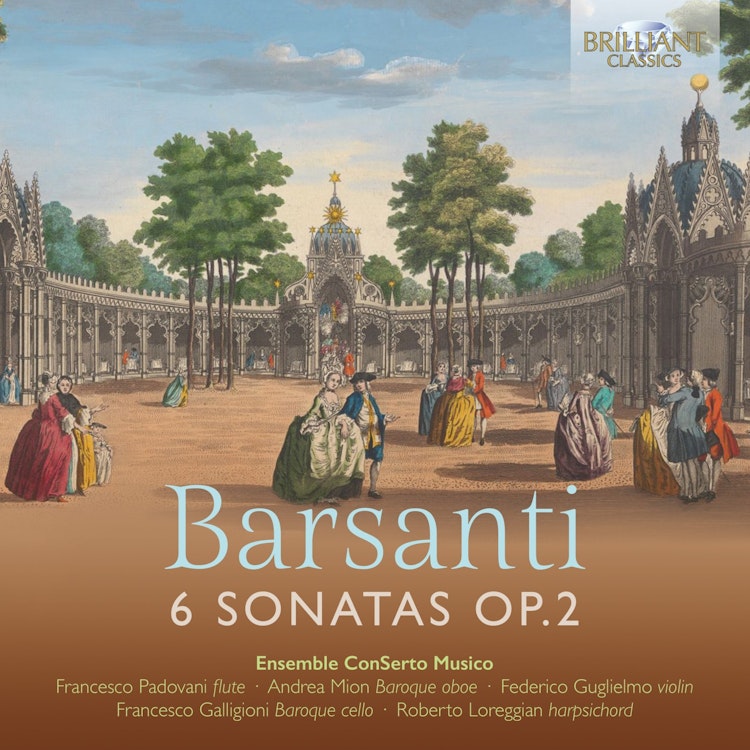
Barsanti's 6 Sonatas Op.2 were first published in 1728 by Ben Cooke, but a later edition by Walsh was titled 'Opera terza' to make room for Barsanti's arrangements of Geminiani's sonatas as Op.2.
Interpretation
On this album, each sonata is introduced by a Scottish Aria, performed by harpsichord and cello, to create a sonic overture that sets the tonality of the sonata.
Composer's Artistic Vision
Barsanti was a pioneer in using instruments like brass and timpani and preferred to experiment with different forms, showing a refined taste.
Composer Biography
Francesco Barsanti, an Italian composer, moved to England in the 1720s after studying law in Padua and finding unpromising musical prospects in Italy.
Compositional Technique
Barsanti's sonatas feature a contrapuntal texture, graceful melodies in slow movements, and rhythmic verve in fast ones, often building polyphonic discourse between the soloist and bass.
Composer's Artistic Vision
Barsanti's 'A Collection of Old Scots Tunes' aimed to enhance existing Scottish melodies by adding suitable bass lines without altering the original tunes, reflecting an ethnographic intent.
Composer Biography
Barsanti was a versatile musician, working as a music teacher, arranger, impresario, and copyist, and was known for following his musical interests rather than seeking fame.
You might also enjoy...
Telemann: A Portrait
Telemann: Concerti da camera, Vol. 1
Sammartini: 6 Solos for German Flute, Violin or Hautboy, Op. 13