Barsanti's Concerti grossi subdivide into two groups: five scored for two horns, timpani, and strings, and five for trumpet, two oboes, timpani, and strings.
Composer's Artistic Vision
Barsanti's collections reflect the democratic, participatory nature of a music society and the Scottish environment, which he found congenial due to his interest in antiquity, ethnography, and traditional music.
Composer Biography
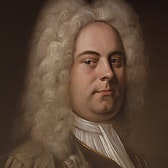
George Frideric Handel, a subscriber to Georg Philipp Telemann's Tafelmusik, repeatedly used it for ideas, with echoes of Telemann's style appearing in Handel's melodic lines.
Historical Context
The overture to Handel's opera Atalanta, premiered in 1736, was a celebration of the wedding of the Prince of Wales, Frederick Louis, to Princess Augusta of Saxe-Gotha.
Recording & Production
This recording, "Edinburgh 1742: Barsanti & Handel, Parte Seconda," is a complement to an earlier Linn recording by Ensemble Marsyas, completing Francesco Barsanti's Concerti grossi, Op. 3.
Composition History
Barsanti's Concerti grossi, published in Edinburgh in November 1742, were the first concertos ever published in Scotland and the first published anywhere to include parts for timpani.
Composer Biography
Francesco Barsanti, an Italian composer, spent eight years (1735-1743) in Edinburgh, mostly serving the Edinburgh Musical Society, where he published two collections in 1742.
You might also enjoy...
Baroque Concerti from The Netherlands
Handel: Apollo and Dafne / Alchemist
Barsanti & Handel: Edinburgh 1742
The World of Bach
TELEMANN, G.P.: Concerto in D Major, TWV 53:D5 / VIVALDI, A.: Concerto for Viola d'amore and Lute (Virtuosi Saxoniae, Guttler)
Baroque Concertos & Sonatas for Trumpet
Christmas Music - Scarlatti, A. / Corelli, A. / Pachelbel, J. / Bach, J.S.