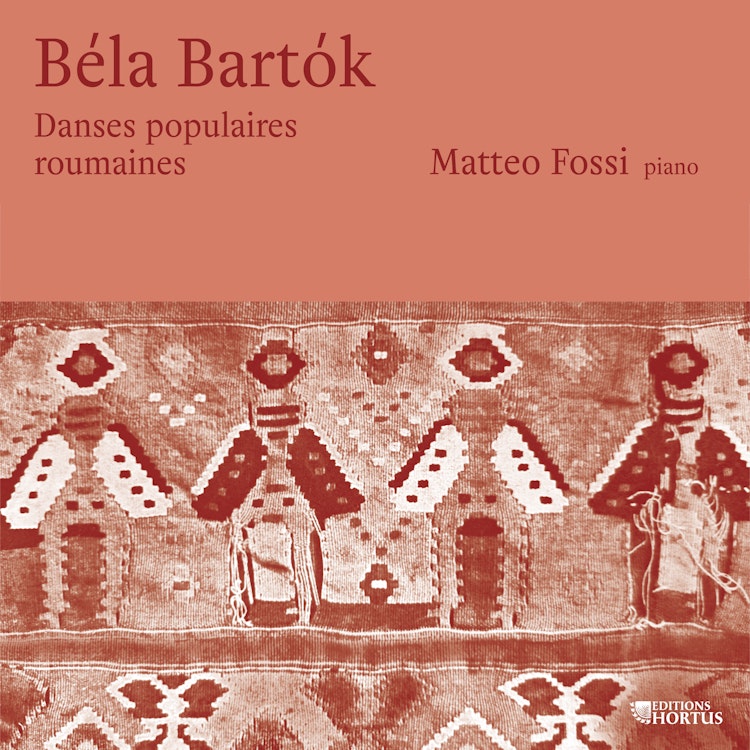
This album was recorded at the Fazioli Concert Hall in Sacile, Italy, using a Fazioli F278 piano.
Composer's Artistic Vision
Béla Bartók, a pioneer of modern ethnomusicology, aimed to both study and promote the folk musics he loved, and to enrich his own compositional style with them.
Composer Biography
Bartók's early musical development was influenced by Johannes Brahms, Richard Wagner, Richard Strauss, and Franz Liszt, before he found his unique voice through folk music.
Compositional Technique
Bartók's appropriation of folk music ranged from direct arrangements, like those for 'Three Folksongs from the County of Csík', to imitation, as seen in 'Two Rumanian Folk Dances' and 'Allegro barbaro'.
Composer's Artistic Vision
Bartók aimed to transform pianistic technique into a more transparent style, emphasizing 'bone and muscle' over the heavy chordal style of late Romanticism, particularly in his 'Suite op. 14'.
Composition History
Bartók's discovery of Hungarian folksongs in 1904, which differed from the 'verbunkos' style Liszt used, was a catalyst for a radical shift in his compositional style.
Performer Biography
Matteo Fossi, the pianist on this album, is a highly regarded Italian chamber musician who has performed internationally and founded the Quartetto Klimt.
You might also enjoy...
Bartók: 15 Hungarian Peasant Songs & Hungarian Folk Songs and More
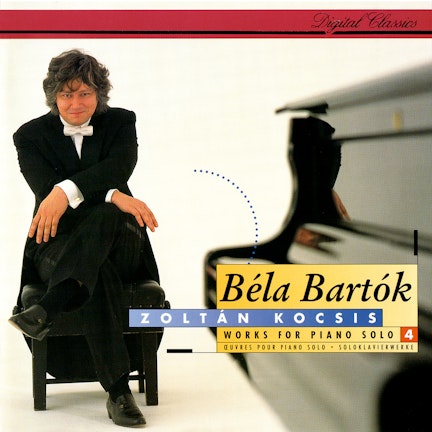
Bartók: Piano Music, Vol. 4
Bartók: Piano Music, Vol. 5
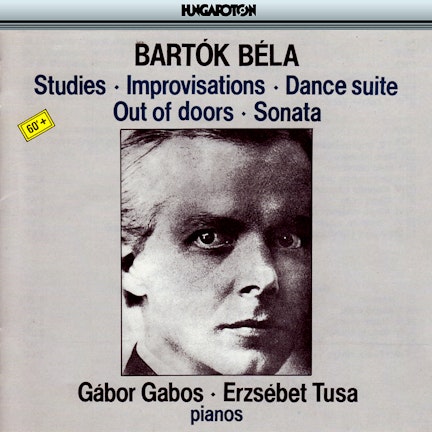
Studies, Improvisations, Dance Suite, Out of Doors
Bartok, B.: Improvisations / Out of Doors / 15 Hungarian Peasant Songs / Piano Sonata / Suite
Bartok: Mikrokosmos (Selection) / Hungarian Peasant Songs, Sz. 71