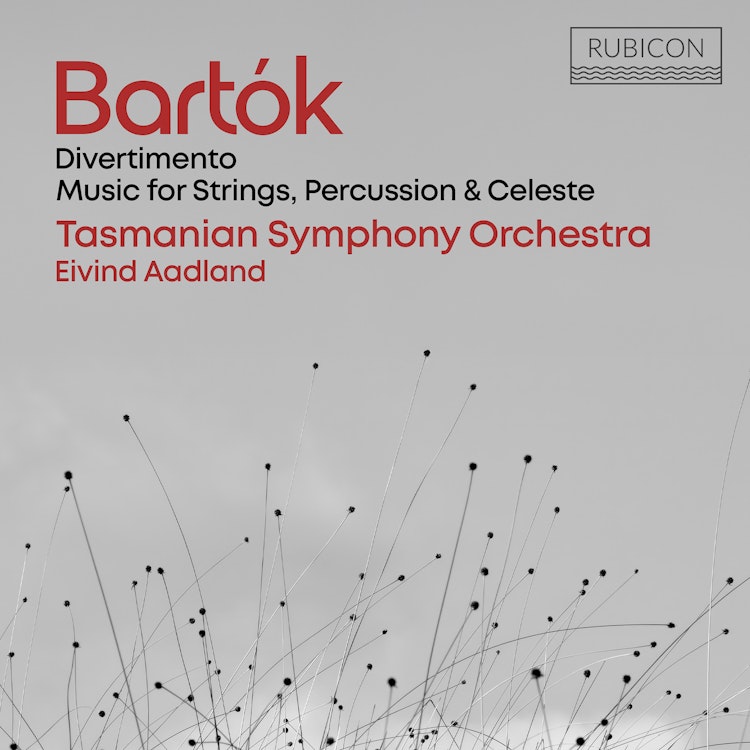
Bartók: Divertimento & Music for Strings, Percussion & Celesta
9/26/2025, 7 Tracks, 54:36
Featuring
Eivind Aadland
Tasmanian Symphony Orchestra
Béla Bartók
Did you know?
1/6
Compositional Technique
In Music for Strings, Percussion and Celesta, Bartók divides the orchestral strings into two equal groups on opposite sides of the stage, with other instruments in the middle, to create antiphonal effects.
Compositional Technique
Bartók's Divertimento for String Orchestra, written in just over two weeks in August 1939, incorporates aspects of the Baroque concerto grosso, notably through frequent solo passages for principal musicians.
Composer's Artistic Vision
Béla Bartók's unique musical voice was profoundly shaped by his extensive study of folk music from Hungary and other Eastern European countries, influencing his use of scales, rhythms, and harmonies.
Composition History
Both works on this album, Divertimento for String Orchestra and Music for Strings, Percussion and Celesta, were commissioned by conductor Paul Sacher for the Basel Chamber Orchestra in the 1930s.
Historical Context
The Basel Chamber Orchestra, which commissioned these works, was known for innovative programming, performing new music alongside 18th-century works, often sidelining music from the intervening century.
Compositional Technique
The third movement of Music for Strings, Percussion and Celesta features Bartók's 'night music' and has a palindromic structure, similar to the first movement.
You might also enjoy...
Weiner: Complete Orchestral Works, Vol. 3
Bartók: Divertimento; Dance Suite; Two Pictures; Hungarian Sketches