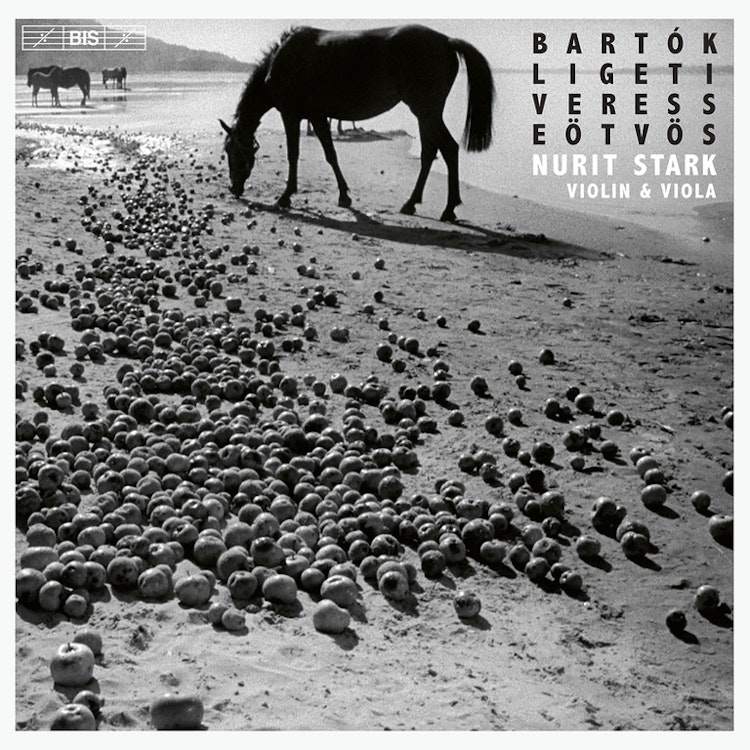
Bartók, Ligeti and Others: Works for Violin & Viola
6/3/2022, 14 Tracks, 1:18:22
Featuring
Nurit Stark
Béla Bartók
György Ligeti
Sándor Veress
Péter Eötvös
Did you know?
1/7
Composer's Artistic Vision
Béla Bartók, a renowned ethnomusicologist, viewed the use of folk melodies in art music as a way to unite different cultures and reject nationalism.
Performer Biography
Nurit Stark, the violinist and violist on this album, gave her first solo performance at age 16 with the Israel Philharmonic Orchestra.
Composer's Artistic Vision
Bartók expressed his artistic dream as the "brotherhood of peoples," striving to serve this idea in music by embracing influences from various cultures.
Compositional Technique
The genre of solo string instrument pieces almost disappeared after the Baroque period, making a comeback in the 20th century with composers like Reger and Hindemith.
Composer Biography
All four Hungarian composers featured on this album — Bartók, Ligeti, Veress, and Eötvös — decided at some point in their lives to leave Hungary.
Composition History
The four pieces on this album were written by four important Hungarian composers over more than eighty years, all for a solo stringed instrument.
Composer Biography
There is a direct pedagogical lineage among three of the composers on this album: Béla Bartók taught Sándor Veress, and Sándor Veress taught György Ligeti.