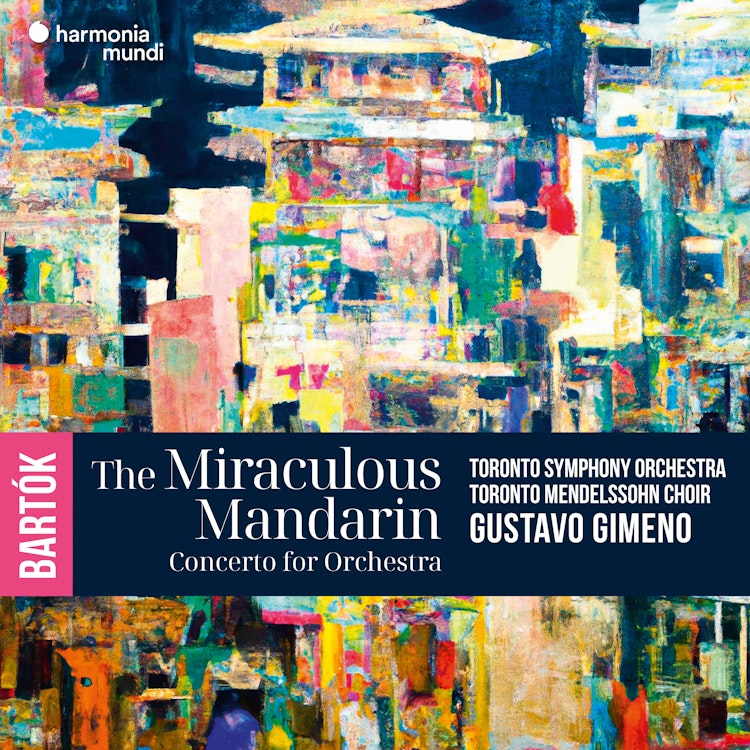
Bartók: The Miraculous Mandarin. Concerto for Orchestra
2/13/2026, 14 Tracks, 1:26:27
Featuring
Gustavo Gimeno
Toronto Mendelssohn Choir
Toronto Symphony Orchestra
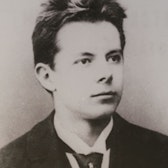
Béla Bartók
Emilie Cecilia LeBel
Did you know?
1/7
Interpretation
Gustavo Gimeno, Music Director of the Toronto Symphony Orchestra, chose to present Bartók's The Miraculous Mandarin in its complete form for this recording, as about one-third of the music, including a choral part, is rarely performed.
Composition History
Bartók's The Miraculous Mandarin was conceived during a period of personal turmoil for the composer, following the failure of his first marriage and an unrequited passion for Klára Gombossy.
Compositional Technique
The Concerto for Orchestra showcases Bartók's wide harmonic palette, incorporating diatonic and modal clarity from folk music, challenging chromaticism, and non-diatonic scales like whole-tone, acoustic, and octatonic scales.
Composer's Artistic Vision
Bartók's three stage works, including The Miraculous Mandarin, are considered among his most admired scores because they offer acute analyses of relations between men and women, reflecting the composer's own personal development.
Historical Context
The Miraculous Mandarin was influenced by the Expressionist aesthetic, reflecting the social and political upheavals of the time and addressing human isolation in urban society, which Bartók detested.
Composition History
Bartók's Concerto for Orchestra was commissioned by Serge Koussevitzky for the Boston Symphony Orchestra, at the urging of Bartók's friends Fritz Reiner and Zoltán Székely, to help him financially during his illness and exile in the US.
Composer Biography
Emilie Cecilia LeBel, the composer of "the sediments," served as the RBC Affiliate Composer with the Toronto Symphony Orchestra from 2018 to 2022 and is currently their Composer Advisor.
You might also enjoy...
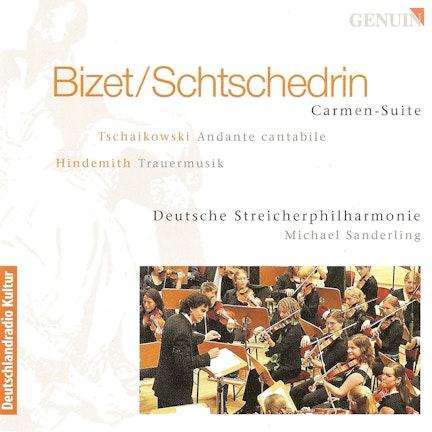
Shchedrin, R.K.: Carmen Suite / Hindemith, P.: Trauermusik
Reza Vali: The Darkness of Fury
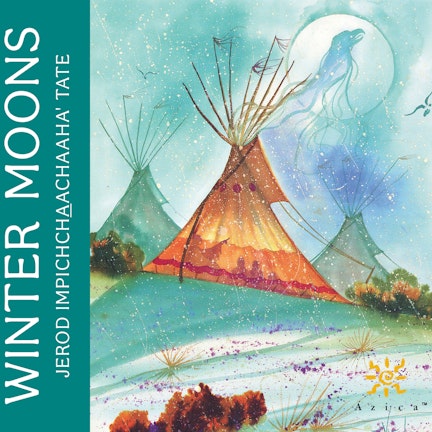
Winter Moons
Marlos Nobre • Orchestral, Vocal and Chamber Works
American Elegies
Kirchner: Bildnisse I / Der blaue Harlekin / Trio / Nachtstück
Kaija Saariaho: 70 Years
Edmund Finnis: The Air, Turning
Orchestral Music (Nordic): Rautavaara, E. / Pingoud, E. / Nordgren, P.H. / Sallinen, A. (Aurora Borealis - The Magic of Northern Lights)
Alessio Elia: Celestial Keys
City Lights
Under tonsättarens taktpinne
Dialogues & Meditations: The Orchestral Music of Steven Holochwost