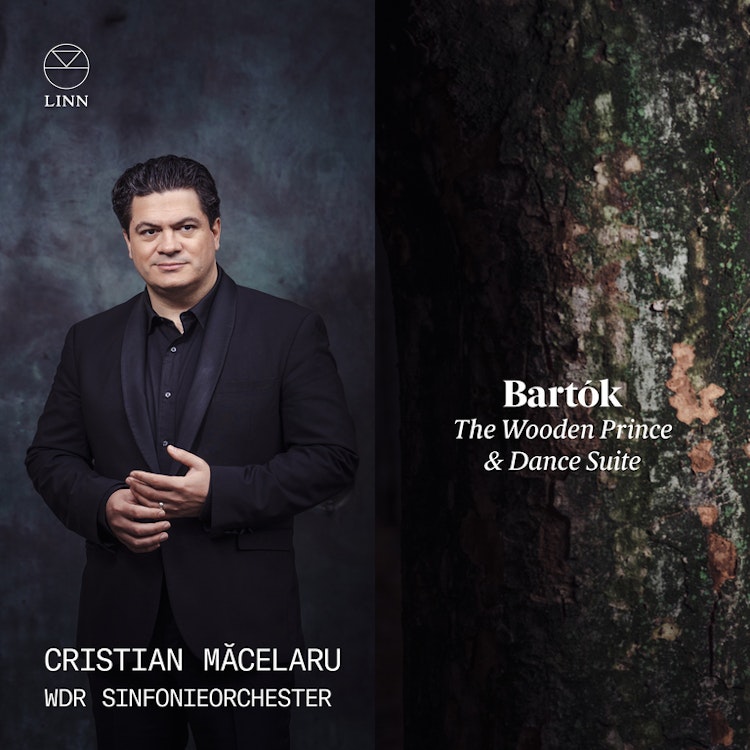
Cristian Măcelaru, the conductor, serves as Chief Conductor of the WDR Sinfonieorchester and Musical Director of the Orchestre National de France, and is also Artistic Director of the George Enescu Festival in his home country of Romania.
Compositional Technique
Bartók's Dance Suite incorporates diverse musical styles from outside Hungary, including Romanian and North African influences, rather than being a purely Hungarian celebration.
Composer's Artistic Vision
Bartók's interpretation of The Wooden Prince differed from his librettist Béla Balázs's; Bartók saw the wooden puppet as an artificial, negative element, contrasting with his love for wild nature.
Composer Biography
Although the themes in Dance Suite are Bartók's own inventions, they are rooted in his extensive research of ethnic songs and dances from Hungary, Romania, and Algeria.
Composition History
Bartók initially conceived his ballet, The Wooden Prince, as a double-bill with his opera Bluebeard's Castle, prompted by the opera's neglect.
Historical Context
Bartók's Dance Suite was commissioned for the 1923 fiftieth anniversary of the union of Buda and Pest, alongside works by Ernő Dohnányi and Zoltán Kodály.
Critical Reception
The Dance Suite initially failed to make an impression at its 1923 premiere due to under-rehearsal, but gained acclaim after a 1925 performance by Czech conductor Václav Talich.
You might also enjoy...
Bartók: The Wooden Prince, Op. 13, Sz. 60 & The Miraculous Mandarin Suite, Op. 19, Sz. 73
Revolutionary Rhythms
Bartok: The Miraculous Mandarin - Weiner: Hungarian Folk Dances Suite
Bizet-Schedrin - Carmen Suite & Stravinsky - Firebird Suite
Bartok: Wooden Prince (The) / Dance Suite
Roussel: Bacchus et Ariane Suites
Weill: The Seven Deadly Sins and The Threepenny Opera
Stravinsky: Petrouchka; Divertimento from Le Baiser de la fée
Bartok: The Miraculous Mandarin Suite & The Wooden Prince Suite
Copland: Appalachian Spring / Stravinsky: Apollon musagète
Stravinsky: The Rite of Spring & The Firebird Suite