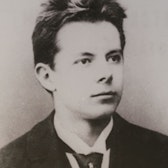
Bartók originally conceived the Violin Concerto No. 2 as a single-movement work in theme and variations form but acceded to the soloist's request for a conventional three-movement concerto, retaining the theme-and-variations idea in the central movement.
Historical Context
Bartók, fiercely opposed to the Nazi regime, was unable to attend the premiere of his Violin Concerto No. 2 in 1939 and only heard it performed in New York in 1943 by Tossy Spivakovsky.
Notable Performances
The premiere of Bartók's Violin Concerto No. 2 took place on March 23, 1939, in Amsterdam, performed by its dedicatee Zoltán Székely and the Concertgebouw Orchestra conducted by Willem Mengelberg.
Composition History
Bartók's Violin Concerto No. 2 was commissioned in 1937 by his friend Zoltán Székely, who became the leader of the celebrated Hungarian Quartet that same year.
Composition History
The Violin Concerto No. 2 had a long gestation period of sixteen months for Bartók and underwent several revisions, particularly to the finale, at the request of the soloist.
Recording & Production
This recording of Bartók's Violin Concerto No. 2 by Itzhak Perlman and the London Symphony Orchestra with André Previn was made on October 10, 1973, at Kingsway Hall, London.
You might also enjoy...
Feldman: Trio
Kurtág: Rückblick (Altes und Neues für 4 Spieler - Hommage à Stockhausen)
Cage: Five3
Osvaldo Coluccino: Interni
Morton Feldman: Piano and String Quartet
Feldman: Piano Trio
Pärt: Sequentia
Breier: Der Weg und die Zeit
Cage: Works for Percussion, Vol. 3 (1991)
The Complete John Cage Edition, Vol. 32: The Number Pieces 3
Piano, Violin, Viola, Cello
Feldman, Vol. 4: The Straits of Magellan, Projections, Durations, & Two Pieces