Bassoon Recital: Geoghegan, Karen - Hummel, J. / Weber, C. M. / Berwald, F. / Jacobi, C. / Elgar, E. / Gershwin, G.
1/24/2000, 12 Tracks, 1:03:31
Featuring
Benjamin Wallfisch
Karen Geoghegan
Orchestra of Opera North
Johann Nepomuk Hummel
Carl Maria von Weber
Franz Berwald
Karl Jacobi
Edward Elgar
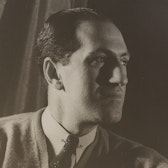
George Gershwin
Did you know?
1/7
Compositional Technique
Hummel's Grand Concerto for bassoon is technically demanding, featuring long, florid passages with large leaps and fast tempos, reflecting his awareness of the bassoon's structural developments at the time.
Recording & Production
The recording of Carl Jacobi's Introduction and Polonaise, Op. 9, on this album is the first of its original form for bassoon and orchestra, as it has typically been performed in a reduction for bassoon and piano.
Composer's Artistic Vision
The bassoon has often been misrepresented as lacking agility and relegated to bass functions, leading to "the Great Bassoon Joke" according to Donald Tovey.
Composer Biography
Carl Jacobi, a composer and virtuoso bassoonist, was incredibly prolific, credited with three bassoon concertos, a concertino, and numerous other works for the instrument, many of which remained in print.
Composition History
Carl Maria von Weber's Andante and Hungarian Rondo for bassoon was originally composed for viola and orchestra for his brother Fritz, and later adapted for bassoon at the request of Georg Friedrich Brandt, a bassoonist.
Composer Biography
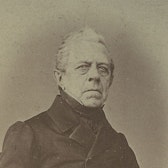
Johann Nepomuk Hummel, a composer featured on this album, studied composition with Mozart and later took lessons from Haydn, Albrechtsberger, and Salieri—the same teachers as Beethoven.
Composition History
There is uncertainty about the exact date of Hummel's Grand Concerto for bassoon and orchestra; some scholars suggest 1805, while an inscription points to 1811-16.
You might also enjoy...
Horizon 4
Eisler: Orchestral Works
Röntgen: Piano Concertos Nos. 3, 6 & 7
Music from 6 Continents (1998 Series)
Cramer: Piano Sonatas Played On Broadwood Grand Fortepiano
Reason & Reverence
Messiaen: Et Exspecto Resurrectionem Mortuorum; Chronochromie; La Ville d'en haut
Messiaen: Chronochromie Pour Grand Orchestre; La Ville D'En Haut; Et Exspecto Resurrectionem Mortuorum Pour Orchestre De Bois, Cuuivres Et Percussion Métalliques
Mills: Elan Valley
Symphony No. 2
Copland: Piano Concerto - Schuman: Concerto on Old English Rounds & To Thee Old Cause