Beethoven's Ninth Symphony has become a powerful symbol of peace, tolerance, and freedom, played at the fall of the Berlin Wall and adopted as a hymn by the European Union.
Composition History
Beethoven was deaf when he composed his Ninth Symphony, which premiered in 1824, three years before his death.
Notable Performances
At the premiere of his Ninth Symphony, Beethoven stood at the podium indicating tempo, but an assisting conductor managed the musicians because Beethoven was deaf.
Instruments
While the strings play modern instruments, the horns and trumpets in this recording use copies of instruments from Beethoven's era.
Composer Biography
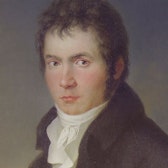
Beethoven knew and treasured the works of the poet, philosopher, playwright, and historian Friedrich Schiller from a young age.
Interpretation
Conductor Lan Shui uses Beethoven's original, fast tempo indications for these recordings, which were initially challenging for the orchestra.
Interpretation
For this recording, Copenhagen Phil's string section is rearranged, with cellos next to first violins and in front of horns, to achieve a different sound balance.