The duo on this album, French cellist Pierre Fournier and Austrian pianist Friedrich Gulda, were separated by a generation, with Fournier experiencing pre-war imperial Europe and Gulda growing up during totalitarianism and WWII.
Interpretation
Friedrich Gulda's playing style for these Beethoven works was uncommonly lucid and analytically enlightened, an approach that may have disconcerted listeners accustomed to a more Romantic Beethoven at the time of recording.
Cultural Impact
The partnership of Fournier and Gulda was an early example of combining French 'clarté' and German 'analytic probing,' influencing later high-quality performances from René Leibowitz to Pierre Boulez.
Recording & Production
During the recording sessions in Vienna in 1959, Friedrich Gulda insisted on switching from a Steinway to a Bösendorfer piano due to poor balance and the Steinway being too loud.
Interpretation
Pierre Fournier's approach to these Beethoven sonatas involved exercising extreme discipline in deploying his instrument's expressive capacity, treating the piano as the 'weaker partner' that requires consideration.
Performer Biography
Pierre Fournier's cello playing was characterized by discretion and a perfect balance of registers, a hallmark of the French school of cello-playing.
You might also enjoy...
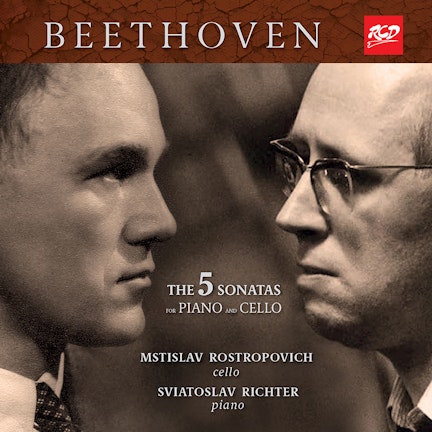
Rostropovich & Richter played the complete Sonatas for Cello and Piano by Beethoven
Beethoven: The Cello Sonatas
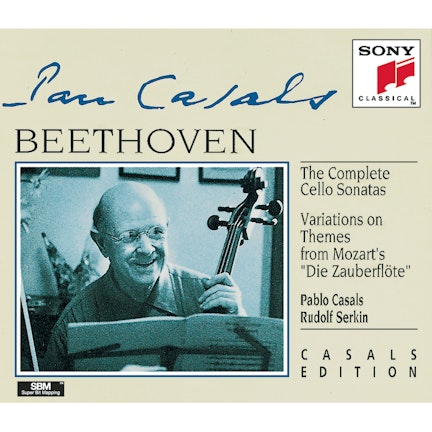
Pablo Casals plays the Beethoven Cello Sonatas
Beethoven: Complete Cello Sonatas; Variations on Zauberflöte Themes
Beethoven: Complete Cello Sonatas; Variations on Zauberflöte Themes
Daniel Shafran, Vol. 3: Beethoven Cello Sonatas
Beethoven: Complete Works for Cello & Piano
Beethoven, L. van: Past and Present
Beethoven, L. Van: Cello Sonatas Nos. 1-3
Sviatoslav Richter Plays Violin Works by Beethoven: Choral Fantasy, Op. 80 / Cello Sonatas: No. 1, Op. 5 & No. 2, Op. 5