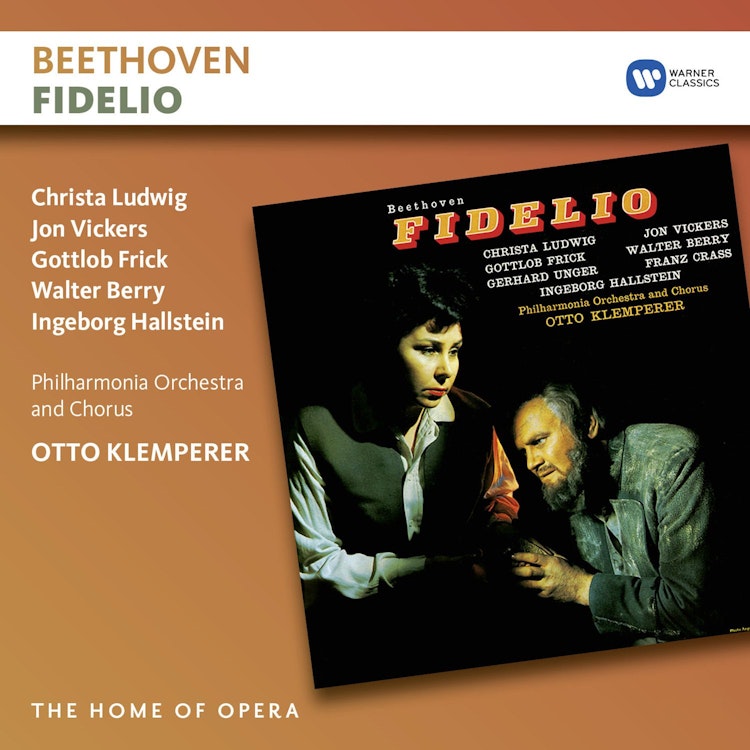
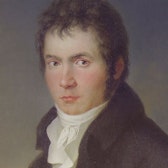
Beethoven spent eleven years (1803-1814) developing Fidelio, which involved a protracted search for a suitable libretto.
Composer's Artistic Vision
Beethoven's opera, Fidelio, aligns with his political beliefs and his view of life as a moral and spiritual quest, particularly its theme of a faithful wife saving her imprisoned nobleman husband.
Composition History
The 1814 version of Fidelio, as it is known today, is considered one of the great revisions in Western European cultural history, characterized by its economy and inevitability of word and action.
Recording & Production
This recording of Fidelio came about partly by chance, as EMI's Walter Legge initially intended to record the opera with conductor Herbert von Karajan.
Interpretation
Otto Klemperer, the conductor of this recording, first heard Fidelio at age eleven, and it became a central musical calling for him throughout his career.
Interpretation
Klemperer's interpretation of Fidelio, including his masterly pacing and intensely rapt beginnings, was noted as early as 1915 and remained consistent throughout his career.
Performer Biography
Otto Klemperer, the conductor, suffered from a manic-depressive condition that led to a widely publicized elopement early in his career, costing him his job and reputation for a time.