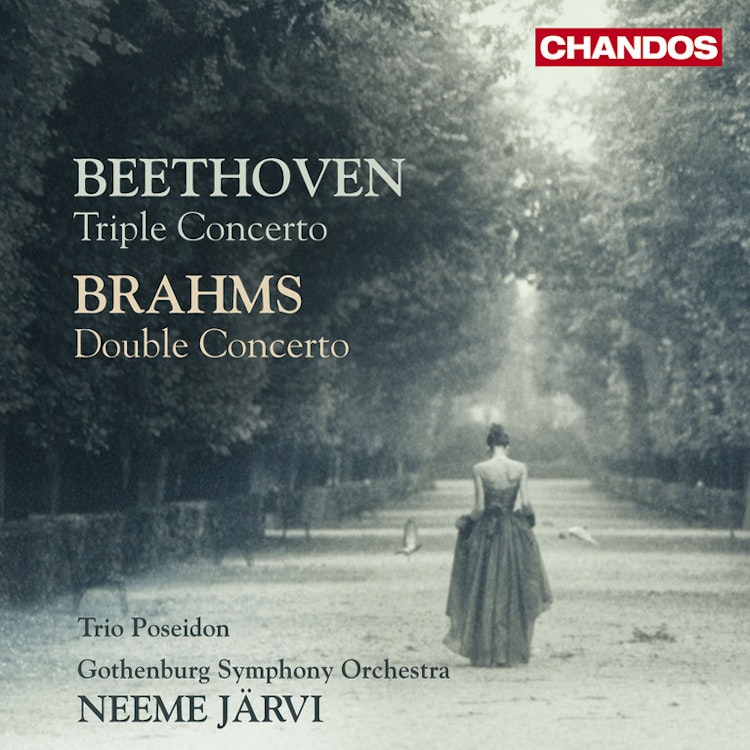
Beethoven, L. van: Triple Concerto, Op. 56 / Brahms, J.: Double Concerto, Op. 102
2/23/2010, 6 Tracks, 1:09:41
Featuring
Neeme Järvi
Sara Trobäck Hesselink
Claes Gunnarsson
Per Lundberg
Göteborgs Symfoniker
Trio Poseidon
Ludwig van Beethoven
Johannes Brahms
Did you know?
1/7
Compositional Technique
In Brahms's Double Concerto, the two string instruments are treated as co-equal soloists, suggesting a dialogue, often interpreted as a male/female exchange due to their contrasting characters.
Performer Biography
Neeme Järvi, the conductor, has amassed a distinguished discography of over 400 discs, with more than 150 recorded for Chandos.
Recording & Production
This recording uses 24-bit technology, which offers a dynamic range up to 48 dB greater and 256 times the resolution of standard 16-bit recordings.
Composer's Artistic Vision
Brahms's Double Concerto may imply that the soloists represent Brahms and Joseph Joachim, the violinist for whom the work was partly a reconciliation gesture.
Composition History
The piano part in Beethoven's Triple Concerto was designed for a pianist of modest skill, as it was intended for Archduke Rudolph, while the violin and cello parts required more virtuoso players.
Composition History
Beethoven's Triple Concerto was originally intended for Archduke Rudolph of Austria, Emperor Leopold II's son, who had begun studying with Beethoven in 1803.
Composition History
Brahms's Double Concerto was partly written as a peace-offering to violinist Joseph Joachim, whose friendship with Brahms had been damaged after Joachim's divorce attempt.
You might also enjoy...
Brahms: Double Concerto in A Minor, Op. 102 & Beethoven: Triple Concerto in C Major, Op. 56