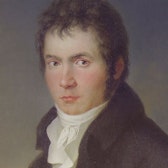
Beethoven was prompted to compose the Missa solemnis by the appointment of Archduke Rudolph, his pupil and patron, as Archbishop of Olomouc and then as a Cardinal in 1819.
Critical Reception
Due to its immense size and critical stance towards the church, the Missa solemnis was deemed unsuitable for religious services, including the investiture of a cardinal.
Composition History
Beethoven initially hoped that Archduke Rudolph's new position would secure him a court position as Hofkapellmeister, a desire he expressed in numerous letters.
Composer's Artistic Vision
Beethoven's Missa solemnis is an impressive testament to his faith, pantheism, distance from Catholic doctrine, profound humanism, and pacifism.
Composer Biography
Archduke Rudolph, to whom the Missa solemnis is dedicated, was one of Beethoven's most important patrons and had been his piano and composition student since about 1804.
Performer Biography
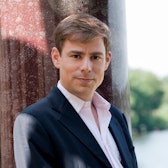
Bernard Haitink, the conductor on this album, has an international career spanning six decades and has held positions with major orchestras like the Concertgebouw Orchestra and the London Philharmonic.
Notable Performances
The premiere of the Missa solemnis took place in St. Petersburg in 1824, nearly five years after the first drafts, and was performed in a concert hall rather than a church.
You might also enjoy...
Gounod: Messe solennelle de Sainte Cécile
Beethoven: Mass in D Major, Op. 123 "Missa solemnis"
Dvorák: Mass in D Major, Op. 86
Gounod: St. Cecilia Mass / Bizet: Te Deum
Rossini: Stabat Mater
Anton Bruckner: Mass No. 2 (1882 version) / Te Deum [1884 version] [Berlin Radio Chorus and Symphony Orchestra, Rogner]
Rossini: Stabat Mater
Bruckner: Mass No. 1 in D Minor
Beethoven: Missa solemnis, Op. 123
Beethoven: Mass in D Major, Op. 123 "Missa Solemnis"
Suppe: Requiem
Bruckner: Messe F-moll
Cherubini: Mass No. 2 in D Minor, "Messe Solennelle"