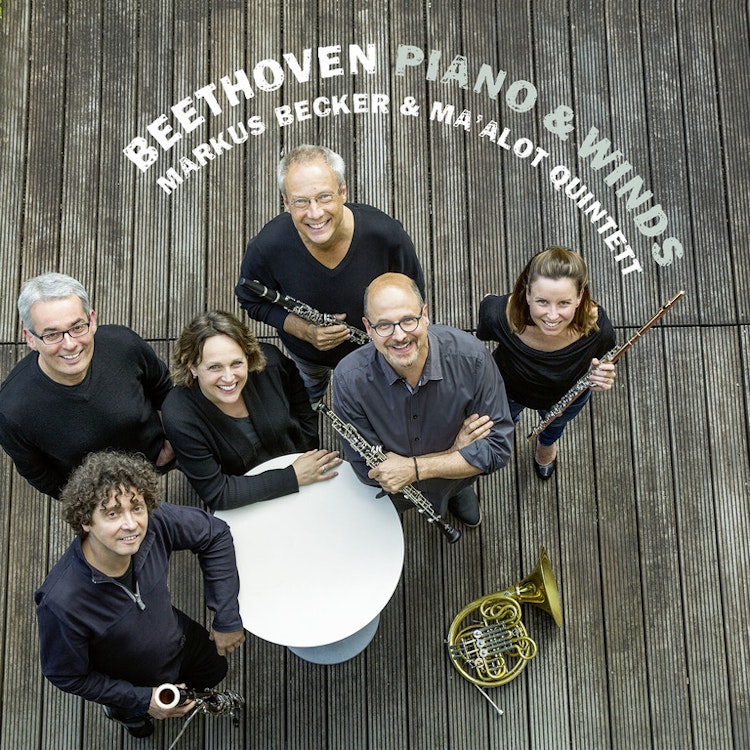
The performers on this album chose Howard Shelley's reconstruction of Beethoven's Piano Concerto No. 0 because it allowed for more idiosyncrasies of a young genius, unlike Willy Hess's more 'reverent' approach.
Composition History
Beethoven's Quintet Op. 16 for piano and winds was composed in 1796 for his own concerts in Vienna, taking Mozart's Quintet in E Flat Major K. 452 for the same instrumentation as its model.
Compositional Technique
Unlike Mozart's Quintet, which aimed for chamber music equilibrium, Beethoven's Quintet Op. 16 is clearly the work of a pianist, with the musical events conceived from a pianist's perspective.
Performer Biography
Pianist Markus Becker is a three-time winner of the ECHO-Klassik award and his complete recording of Max Reger's piano works on 12 CDs is considered legendary.
Composition History
Beethoven's pieces for the mechanical 'flute-playing clock' (Flötenuhr) were written in 1799 for Count Joseph Deym's wax figure museum in Vienna, which featured music by renowned composers.
Compositional Technique
The original orchestration for Beethoven's Piano Concerto No. 0 is lost, but indications in the piano reduction suggest an orchestra of 2 flutes, 2 horns, and a five-part string section, typical of rococo instrumentation.
Composition History
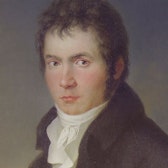
Beethoven's earliest piano concerto, often called "Number Zero," was written when he was 14 years old to showcase his virtuoso piano talent at the Prince Elector's court in Bonn.
You might also enjoy...
Beethoven: Piano & Winds
Röntgen: Wind Serenades
Dialogue
Variations
React: Music for Flute, Violin & Interactive Computer
New Century Flute Concertos
Riisager: Chamber Music
Beethoven: Early Wind Music
Concerti di Napoli
Lehar: Violin Works
Eide, Leo: Whistling Virtuoso
Allen Stephenson: Piccolo Concertino / Erwin Schulhoff: Concertino for Flute, Viola and Double Bass / Mike Mower: Piccolo Sonata