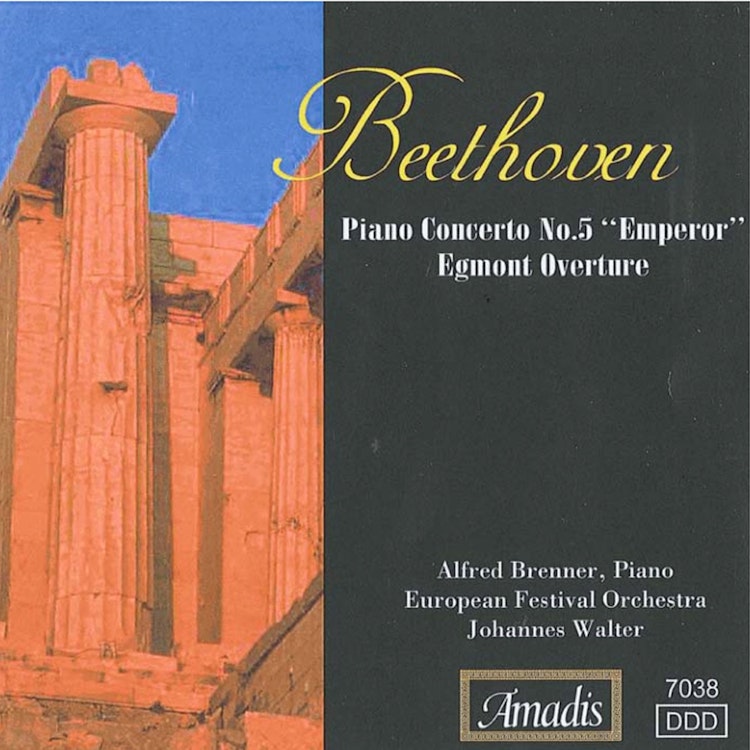
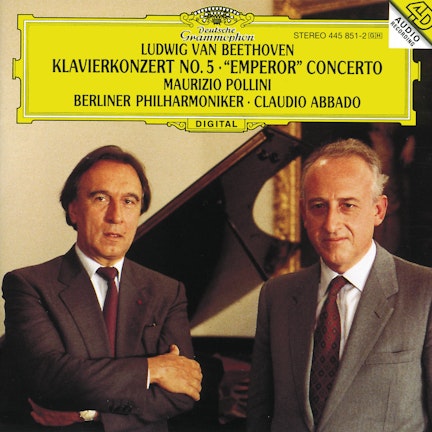
Beethoven: Piano Concerto No. 5, "Emperor" & Egmont Overture
1/1/1990, 4 Tracks, 48:32
Featuring
Johannes Walter
Alfred Brenner
European Festival Orchestra
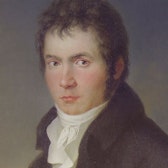
Ludwig van Beethoven
Did you know?
1/7
Composer Biography
Ludwig van Beethoven's father, Johann van Beethoven, was a singer in the chapel but denied his son a sound general education, attempting to exploit his undeveloped musical gifts.
Composer Biography
Beethoven visited Vienna in 1787 hoping for lessons from Mozart, but returned home to Bonn due to his mother's illness, after which his father's drunken habits led to his dismissal.
Composition History
Beethoven's Piano Concerto No. 5, known as the "Emperor" Concerto, was completed in 1809 and dedicated to Archduke Rudolph, Beethoven's pupil and a member of the imperial family.
Composition History
Beethoven's Egmont Overture and incidental music were composed for a 1810 production of Goethe's prose tragedy Egmont, which tells the story of Count Egmont's rebellion against Spanish rulers in the Netherlands.
Composition History
The title "the Emperor" for Beethoven's Piano Concerto No. 5 was not given by the composer himself, though it has helped to impress its qualities on audiences.
Compositional Technique
Beethoven built musical structures of a massiveness previously unknown into classical forms, extending the technical possibilities of the pianoforte and creating symphonies of bewildering grandeur.
Composer Biography
Beethoven's life dramatically changed due to his deafness, which became evident as early as 1798, making public performance impossible and driving him into solitude.
You might also enjoy...
Beethoven: Overture to Egmont, Op. 84, Piano Concerto No. 1 in C Major, Op.15
Beethoven Concertos 2 & 3, Egmont Overture
The Beethoven Project - The 5 Piano Concertos & 4 Overtures
Ludwig van Beethoven conducted by George Szell live
Beethoven: Piano Concertos No. 4
Beethoven: Piano Concerto No. 5 & Egmont and Coriolan Overtures