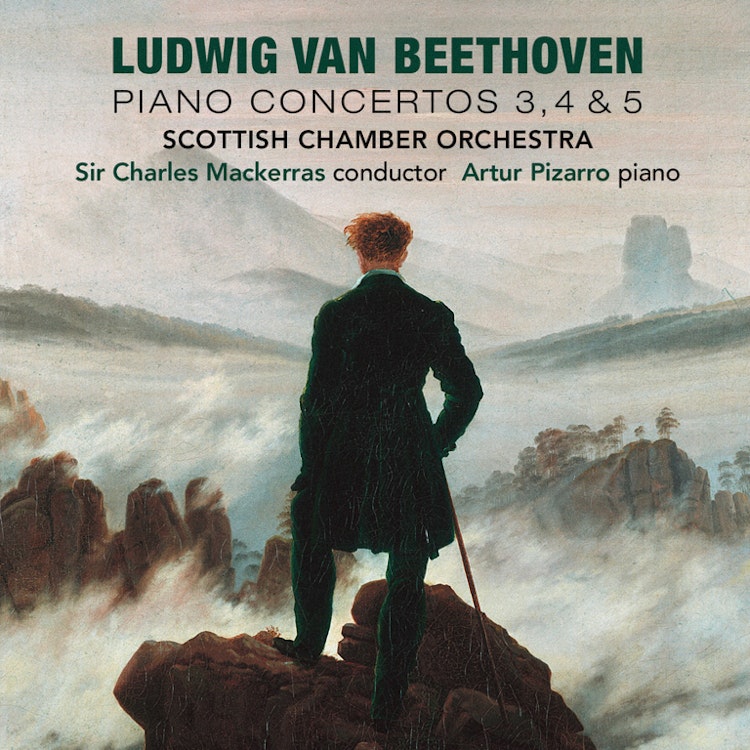
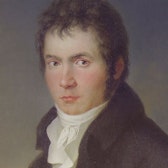
Beethoven's increasing deafness meant he never publicly performed his 'Emperor' Piano Concerto No. 5, which he began in 1809.
Compositional Technique
In Piano Concerto No. 4, the slow movement's dramatic dialogue between strings and piano, where the piano calms the 'angry' strings, is often likened to Orpheus taming the Furies.
Compositional Technique
Piano Concerto No. 4 breaks tradition by beginning with the solo piano instead of the usual extended orchestral introduction, signaling a closer piano-orchestra relationship.
Composition History
Beethoven's Piano Concerto No. 3 was not completed in time for its intended 1800 premiere, and at its 1803 premiere, he played from a largely blank score.
Compositional Technique
Beethoven gives the timpani an important role in both Piano Concerto No. 3 and No. 5, sometimes allowing them to play entire bass lines.
Compositional Technique
Beethoven's last three piano concertos, though not composed as a set, show strong contrasts: No. 3 is stormy, No. 4 is gentle, and No. 5 is grand.
Compositional Technique
In Piano Concerto No. 5, Beethoven again introduces the piano very early, providing ornate decoration to three orchestral chords before the main theme.
You might also enjoy...
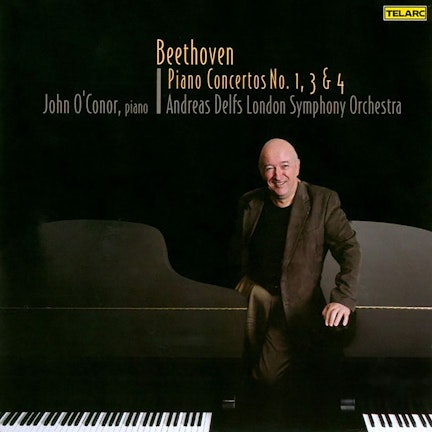
Beethoven: Piano Concertos Nos. 1, 3 & 4
Exclusive: Busoni International Piano Competition: Grand Final 2017