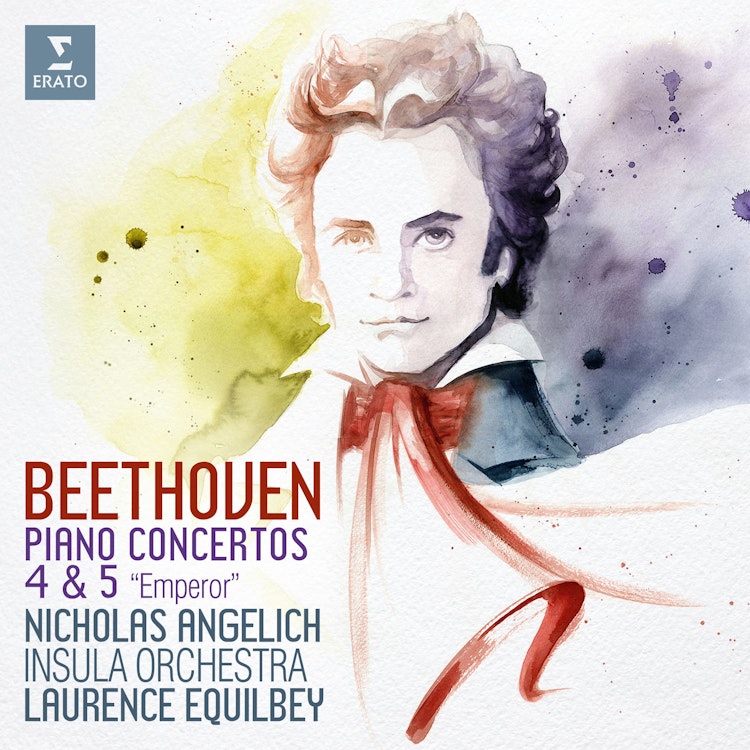
Beethoven: Piano Concertos Nos 4 & 5, "Emperor" (Live)
9/21/2018, 6 Tracks, 1:14:16
Featuring
Laurence Equilbey
Nicholas Angelich
Insula Orchestra
Ludwig van Beethoven
Did you know?
1/6
Critical Reception
Beethoven's Piano Concerto No. 5 was triumphantly received at its 1811 premiere, performed by Friedrich Schneider, and has maintained its popularity ever since.
Interpretation
The performers aimed for a natural outpouring of energy to capture the improvisatory style crucial to these concertos, blending the Pleyel piano with period instruments.
Compositional Technique
Beethoven's Piano Concertos Nos. 4 and 5 are notable for the piano introducing the first theme alone, a technique Mozart pioneered but did not repeat.
Composition History
Beethoven's Piano Concertos Nos. 4 and 5 were composed during a period of intense creativity, despite his increasing deafness.
Historical Context
The subtitle 'Emperor' for Piano Concerto No. 5 was not given by Beethoven, but was added after his death, likely by his friend Johann Baptist Cramer, to emphasize its grandeur.
Instruments
This recording uses a Pleyel piano from 1892, which is believed to be a prototype in the development of Pleyel concert pianos, offering a sound close to a pianoforte.
You might also enjoy...
Beethoven: Piano Concertos Nos.1 & 2
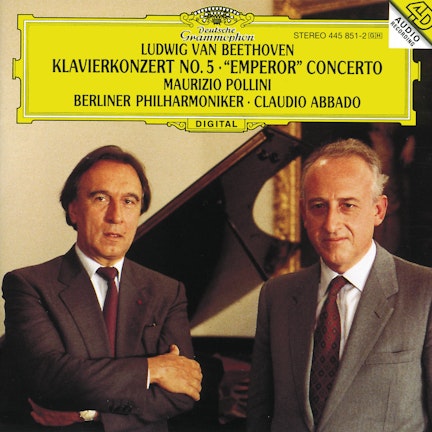
Beethoven: Piano Concerto No.5 "Emperor"
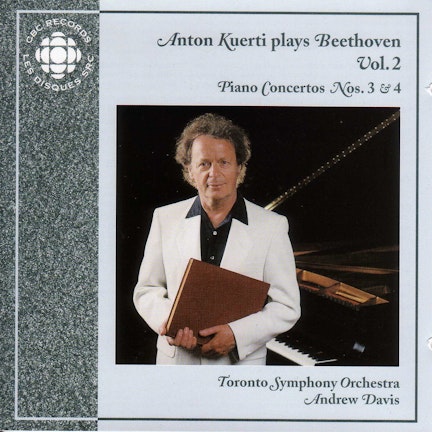
Anton Kuerti Plays Beethoven, Vol. 2
Beethoven: Piano Concerto No. 3 in C Minor, Op. 37
Beethoven: 5 concertos pour piano
Beethoven: Piano Concerto No. 5 in E-Flat Major, Op. 73 "Emperor"
Beethoven: Piano Concertos Nos. 1 & 2
Great Performances At The Ludwig Van Beethoven Easter Festival: Beethoven Piano Concertos Nos. 3 & 4