Beethoven: Piano Sonata No. 28 in A Major, Op. 101: I. Etwas lebhaft und mit der innigsten Empfindung. Allegro ma non troppo
8/15/2025, 1 Track, 04:42
Featuring
Karim Said
Ludwig van Beethoven
Did you know?
1/7
Composer Biography
Beethoven's knowledge of the robust playing style of London-based composers like Muzio Clementi, Jan Ladislav Dussek, and Johann Baptist Cramer influenced the evolution of his piano works.
Instruments
Beethoven often performed on instruments by Matthäus Andreas Stein and Nanette Streicher, which featured the 'Viennese action' invented by their father, Johann Andreas Stein, allowing for fine gradations of touch.
Notable Performances
Beethoven's Piano Concerto No. 3 premiered in April 1803 at the Theater an der Wien after just one rehearsal, with Beethoven himself playing the solo part mostly from memory.
Composition History
Beethoven's Piano Concerto No. 3 in C minor, Op. 37, was likely sketched in late summer 1802, shortly before he wrote his Heiligenstadt Testament, a confession of despair over his worsening hearing.
Historical Context
By the time Beethoven arrived in Vienna in 1792, five-octave fortepianos were common, and Viennese piano makers soon produced instruments spanning five-and-a-half octaves.
Critical Reception
The critical response to the premiere of Beethoven's Piano Concerto No. 3 was lukewarm, with one newspaper reporting that he performed it 'not completely to the audience's satisfaction'.
Composer's Artistic Vision
Beethoven was generally more concerned with expression than keyboard range in his early works, though his later compositions increasingly explored the full compass of the Viennese piano.
You might also enjoy...
Beethoven: Piano Sonata No. 28 in A Major, Op. 101: III. Langsam und sehnsuchtsvoll. Adagio ma non troppo, con affetto
Beethoven: Piano Sonata No. 14 in C-Sharp Minor, Op. 27 No. 2 "Moonlight": I. Adagio sostenuto
Mordecai Shehori Plays Ludwig van Beethoven, Vol. 7
Beethoven: Piano Sonata No. 30 in E Major, Op. 109: III. Andante molto cantabile ed espressivo (Edit)
Beethoven: "Moonlight" Sonata – The Works
Beethoven: Piano Sonata No. 8 in C Minor, Op. 13 "Pathétique": II. Adagio cantabile
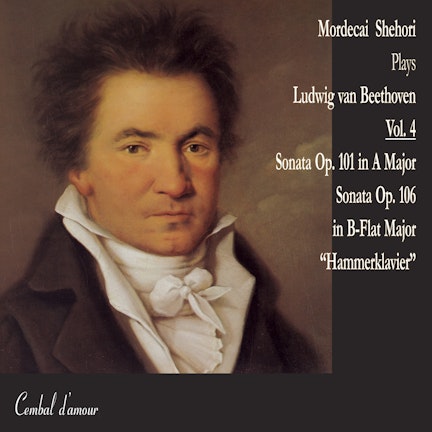
Mordecai Shehori Plays Ludwig van Beethoven, Vol. 4