Franz Liszt gave one of the first documented public performances of the 'Hammerklavier' Sonata in 1836, which Hector Berlioz praised for its fidelity to Beethoven's score.
Critical Reception
The 'Hammerklavier' Sonata was considered "unperformable" and "still misunderstood" for a quarter of a century after Beethoven's death, with some critics claiming the deaf composer didn't understand what he wrote.
Compositional Technique
The 'Hammerklavier' Sonata's first movement begins with three totally contrasted ideas, a technique Donald Francis Tovey compares to Beethoven's Fifth Symphony but notes as distinct.
Composition History
Beethoven's 'Hammerklavier' Sonata, Op. 106, was conceived on an "unimagined scale" and is one of the few major works by Beethoven for which the autograph manuscript is lost.
Composition History
Beethoven's 'Eroica' Variations, Op. 35, were offered to a publisher as being "composed in a truly completely new manner" and broke new ground as his most extended set of variations until the much later Diabelli Variations.
Critical Reception
The 'Hammerklavier' Sonata quickly gained a formidable reputation due to its difficulty and extraordinary dimensions, with Hector Berlioz calling it "the riddle of the Sphinx."
Composition History
Beethoven dedicated the 'Hammerklavier' Sonata to Archduke Rudolf, and its opening theme was derived from an unfinished birthday cantata for him.
You might also enjoy...
Beethoven: Great Pianists of the 20th Century Vol.13
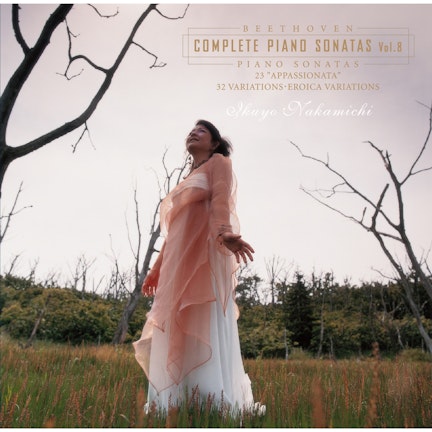
Beethoven, L. Van: Piano Sonatas Nos. 23 and 26 / 15 Variations and A Fugue in E-Flat Major On an Original Theme
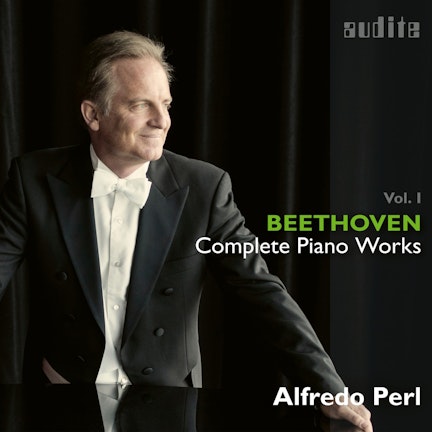
Ludwig van Beethoven: Complete Piano Works, Vol. 1