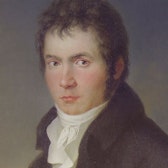
Beethoven lived during a time when music sought new means of expression, particularly in formal aspects, experimenting with new patterns as classical confines were breaking down.
Composition History
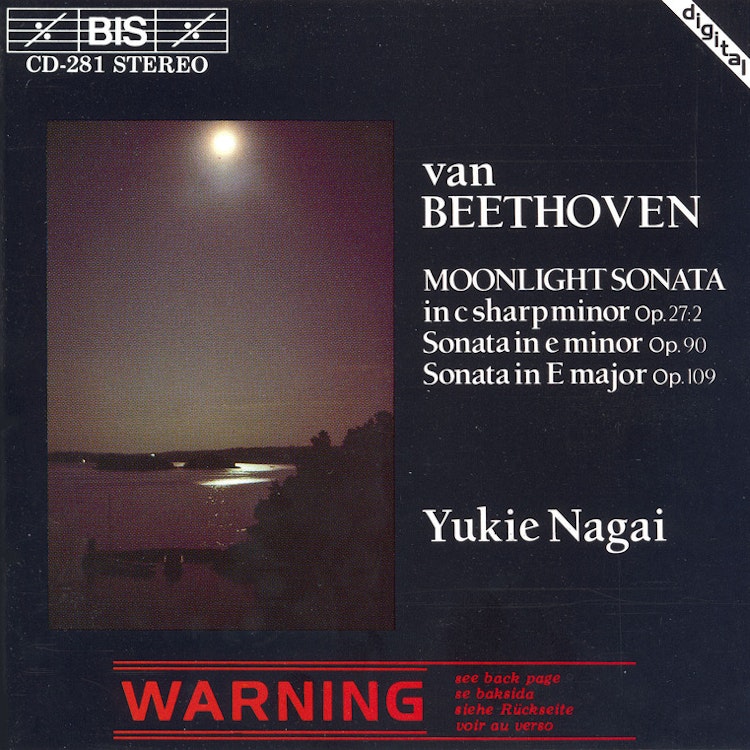
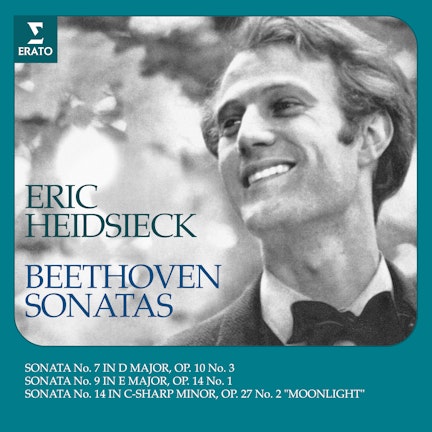
The famous title "Moonlight Sonata" was not given by Beethoven himself, but by a critic named Rellstab, who envisioned a boat in the moonlight on Lake Lucerne.
Composition History
Beethoven dedicated his Sonata in E minor, Op. 90, to Count Lichnowsky, humorously explaining it as a musical description of the Count's romance, with the first movement symbolizing "the struggle between head and heart" and the second a "conversation with the beloved."
Composition History
Beethoven's "Moonlight Sonata" was written in 1801 for his pupil Giulietta Guicciardi, a young lady he was evidently very fond of.
Compositional Technique
In his Piano Sonata Op. 109, Beethoven sought new formal possibilities, with the first two movements serving as a preparation for the final movement's concluding variations.
Compositional Technique
The "Moonlight Sonata" has an unusual structure, omitting the introductory allegro and starting directly with a slow movement, which can be seen as a four-movement sonata without a first movement.