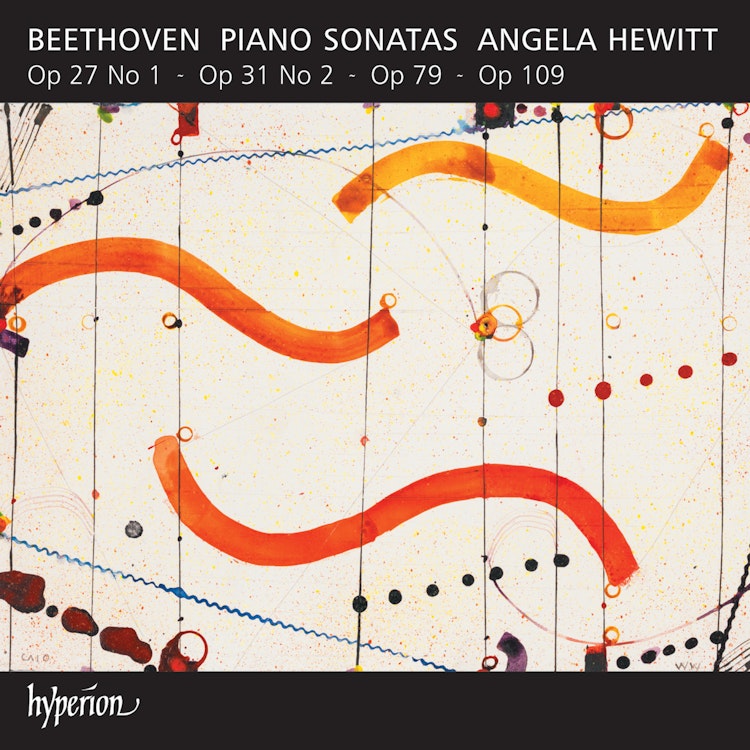
Beethoven: Piano Sonatas, Op. 27/1, Op 31/2 "Tempest", Op. 79 & Op. 109
1/12/2024, 13 Tracks, 1:10:23
Featuring
Angela Hewitt
Ludwig van Beethoven
Did you know?
1/7
Performer Biography
Angela Hewitt, a leading pianist, is renowned for her award-winning recordings of Bach's keyboard works, described as 'one of the record glories of our age'.
Composer Biography
Beethoven was completely deaf and in declining health when he composed the Sonata in E major, Op. 109, in 1820, while also working on his Missa solemnis.
Composition History
Beethoven's Sonata in G major, Op. 79, was published in two different editions in 1810, with one publisher calling it 'Sonatine' at Beethoven's suggestion to make it more popular.
Composer's Artistic Vision
Beethoven often composed wildly different pieces at the same time, some happy and humorous, others tragic, even during periods of personal distress.
Composition History
Beethoven rarely used the key of D minor, but when he did, as in the 'Tempest' Sonata and his Ninth Symphony, it signified something special.
Compositional Technique
The 'Sonata quasi una fantasia' title is more appropriate for Op. 27 No. 1 than its famous companion, as its four movements are played without pause and a theme returns before the final coda.
Composer Biography
In 1802, Beethoven wrote his Heiligenstadt Testament, an emotional letter explaining his increasing deafness and despair, which was discovered only after his death.