In Beethoven's Sonata Op. 27 No. 1, all movements are played without a break, or 'attacca', creating a breathless motion.
Interpretation
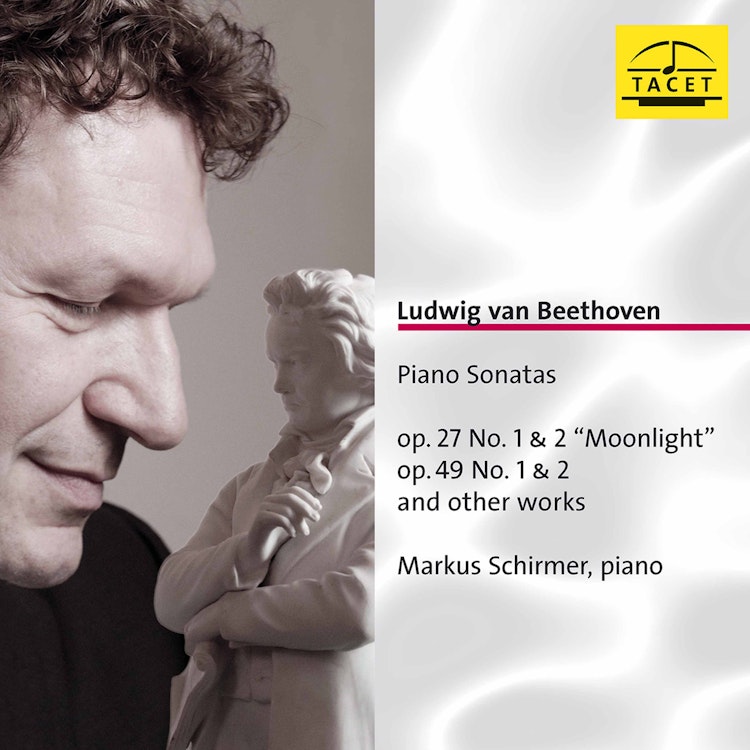
For pianist Markus Schirmer, the 'Moonlight Sonata' is a three-movement meditation on mourning, with the opening Adagio sostenuto interpreted as paralyzing hopelessness.
Cultural Impact
The 'Moonlight Sonata' is one of the most beloved and frequently interpreted sonatas in music history, a celebrity that proved detrimental for its sister work, Op. 27 No. 1.
Performer Biography
Markus Schirmer, an Austrian pianist, has performed in major concert halls and festivals worldwide and has received numerous awards, including the Karl Böhm Interpretation Prize.
Composer Biography
Beethoven dedicated the 'Moonlight Sonata' to Countess Giulietta Guiccardi, who was not only his pupil but also emotionally close to him, leading to speculation that she was the 'Immortal Beloved'.
Composition History
Beethoven titled the two Piano Sonatas Op. 27, Nos. 1 and 2, as 'Sonata quasi una Fantasia' because he wanted to compose something entirely new after writing over a dozen piano sonatas.
Composition History
Beethoven's Sonatas Op. 49, Nos. 1 and 2, were likely written for pedagogical purposes between 1795 and 1798, around the same time as his monumental Sonatas Op. 7 and Op. 13.
You might also enjoy...
Beethoven: Piano Sonatas, Opp. 31 "The Tempest", 78, 79, 81a "Les adieux" & 90
Beethoven: Piano Sonatas, Vol. 8
Beethoven: Piano Sonatas Nos. 23-26
A Beethoven Odyssey, Vol. 8 - Piano Sonatas Nos. 13 "Quasi una fantasia", 16, 18 "The Hunt" and 22
Beethoven: Piano Sonatas, Vol. 7
Beethoven: Piano Sonatas Nos.17 "The Tempest", 21 "Waldstein", 25 & 26 "Les Adieux"