Beethoven: Piano Trio, Op. 70 No. 2 & Schubert: Piano Trio Op. 100
10/22/2021, 8 Tracks, 1:18:59
Featuring
Keiko Shichijo
Cecilia Bernardini
Marcus van den Munckhof
Trio Marie Soldat
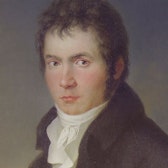
Ludwig van Beethoven
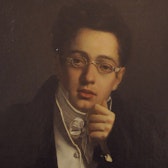
Franz Schubert
Did you know?
1/7
Historical Context
Early 19th-century Vienna fostered chamber music, supported by both the aristocracy as patrons and participants, and a rising middle class that encouraged public concerts.
Interpretation
In Beethoven's and Schubert's time, 'beautiful' performance, which involved greater freedom in rhythm, tempo, dynamics, and ensemble, was expected of accomplished artists.
Interpretation
Expressive techniques like extempore arpeggiation and asynchrony in piano playing, and expressive portamento and ornamental vibrato in string playing, were essential in 19th-century performance.
Interpretation
Performers in Beethoven's and Schubert's era interpreted notation with more freedom than later generations, who focused on painstaking exactness.
Instruments
The fortepiano used on this recording is a Joseph Böhm from Vienna, circa 1825, from the Stanley Hoogland Collection.
Interpretation
The Trio Marie Soldat, founded by Keiko Shichijo (fortepiano), Cecilia Bernardini (violin), and Marcus van den Munckhof (cello), incorporates 19th-century playing techniques like portamento, sparing vibrato, and tempo flexibility.
Album & Artwork
The Trio Marie Soldat is named after the outstanding 19th-century violinist Marie Soldat-Roeger, whose few available recordings served as inspiration for the trio's quest for 19th-century performance practice.