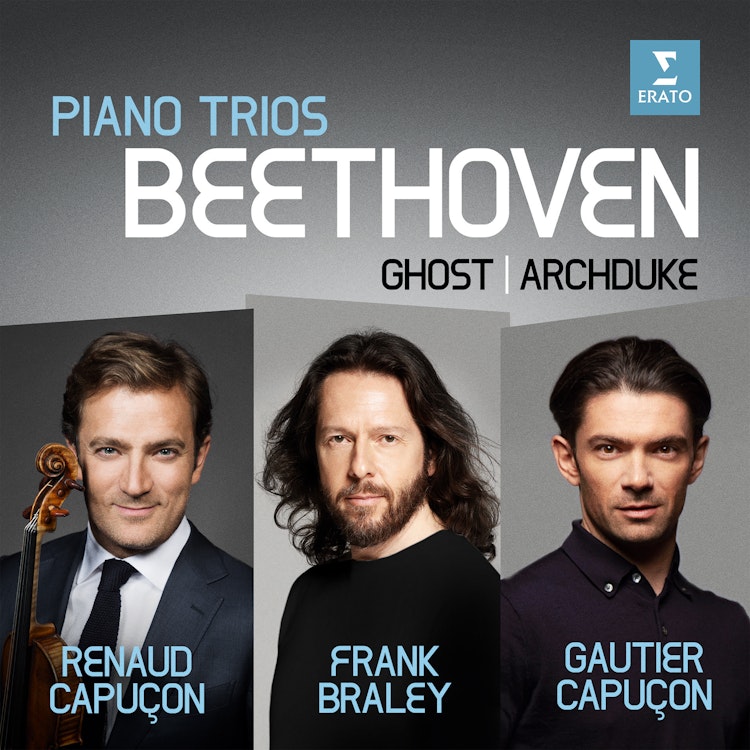
Beethoven: Piano Trios No. 5, "Ghost" & No. 7, "Archduke"
2/28/2020, 7 Tracks, 1:09:46
Three stars of chamber music perform two of Beethoven’s best known piano trios. Violinist Renaud Capuçon, cellist Gautier Capuçon and pianist Frank Braley are well established as partners, and here play the “Ghost” and “Archduke” Piano Trios. The former trio is well known for its mysterious, ghostly slow movement, while the latter is loved for its elegant beauty.
Featuring
Frank Braley
Gautier Capuçon
Renaud Capuçon
Ludwig van Beethoven
Did you know?
1/7
Notable Performances
The public premiere of the 'Archduke' Trio on April 11, 1814, in Vienna, was one of Beethoven's last public appearances as a performer.
Composer Biography
Beethoven called Countess Marie Erdödy, an accomplished musician and hostess of a renowned Viennese salon, his "father confessor" and she became a much-valued confidante.
Compositional Technique
In the 'Archduke' Trio, Beethoven breaks from convention by placing the slow movement after the Scherzo.
Composition History
Beethoven dedicated his Piano Trio Op. 97, known as the 'Archduke' Trio, to Archduke Rudolph of Austria, who was his pupil and a great admirer.
Composition History
Beethoven dedicated his two Op. 70 Trios to Countess Marie Erdödy, in whose home he was living during a period of great productivity, which also saw the premieres of his Fifth and Sixth Symphonies.
Composition History
The Trio No. 5, Op. 70 No. 1, is known as the 'Ghost' Trio due to the eerie atmosphere of its central slow movement, whose main theme Beethoven may have intended for a Macbeth opera.
Historical Context
Countess Erdödy helped secure Beethoven financial support from three wealthy patrons—Princes Lobkowitz and Kinsky, and Archduke Rudolph of Austria—allowing him to work independently in Vienna.
You might also enjoy...
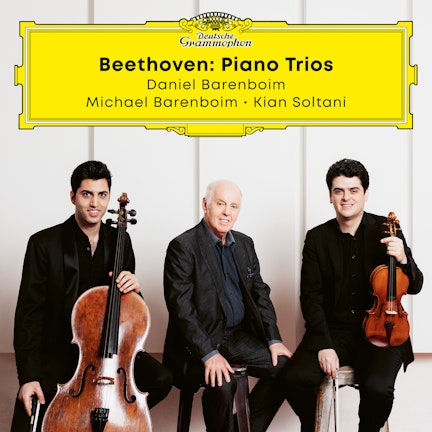
Beethoven: Piano Trios Nos. 5 & 7
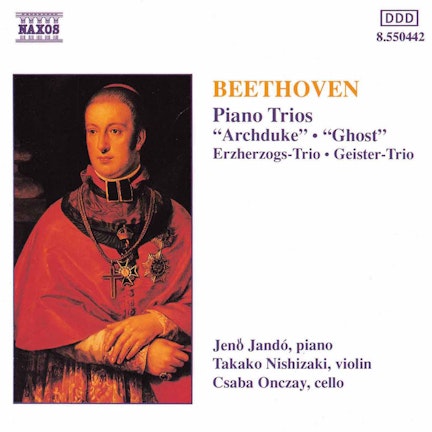
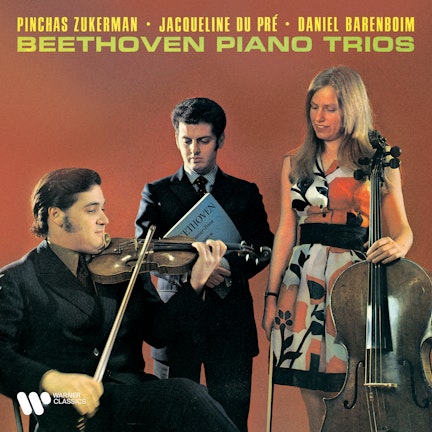
Beethoven: Piano Trios 'Ghost' and 'Archduke'
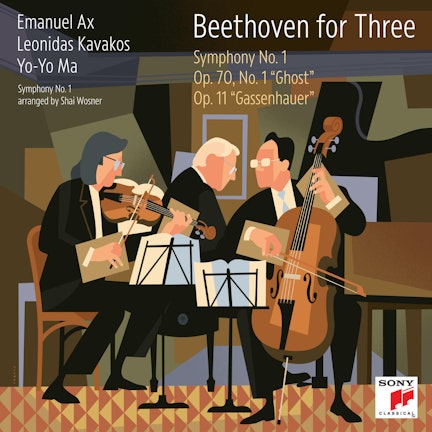
Beethoven for Three: Symphony No. 1 / Op. 70, No. 1 "Ghost" / Op. 11 "Gassenhauer"
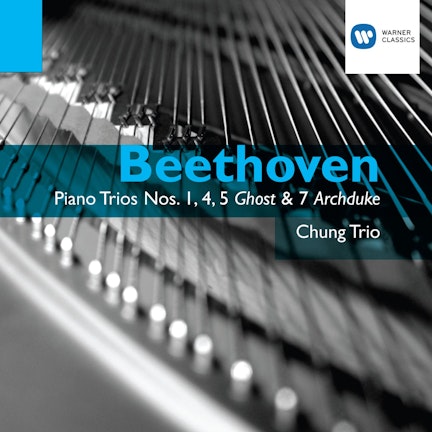
Beethoven: Piano Trios Opp.1 No.1,11,70, No.1 & 97
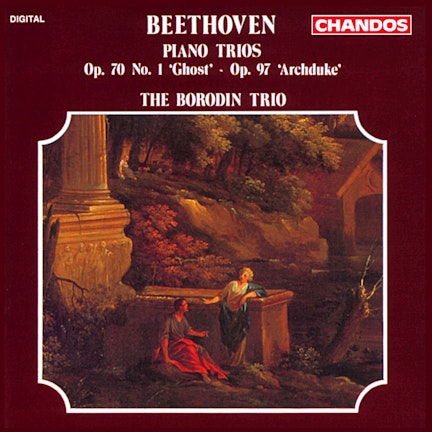
Beethoven: Piano Trios, Op.97 "Archduke" and Op.70, No.1 "Ghost"
Beethoven: Piano Trios Nos. 5 and 7
Beethoven Trios
Beethoven: The Piano Trios & Variations for Piano Trio
Beethoven: The Complete Works for Cello & Piano
Ludwig van Beethoven: Cello Sonatas, Op. 5, Variations