Beethoven's early piano trios, including those in Op. 1, show his orientation towards the models of Joseph Haydn and Wolfgang Amadeus Mozart, who had made significant contributions to the genre.
Cultural Impact
Beethoven's Trio in B-flat major, Op. 11, became known as the 'Gassenhauer' Trio because its third movement uses a popular melody by Joseph Weigl from his comic opera 'L'amor marinaro ossia Il corsaro'.
Composition History
The Piano Trios Op. 1 were dedicated to Prince Karl Lichnowsky, Beethoven's important patron, and their publication in 1795 was financed by him.
Composition History
The Trio in B-flat major, Op. 11, originally for clarinet, cello, and piano, was adapted by Beethoven for violin instead of clarinet to make it more marketable.
Composition History
The Variations in E-flat major for Piano Trio, Op. 44, despite their high opus number from 1804, have sketches dating back to 1792, predating the Op. 1 trios.
Compositional Technique
Beethoven's Piano Trio in C minor, Op. 1 No. 3, introduced innovations like expanding to four movements and using a final sonata movement instead of the traditional rondo, indicating a symphonic concept.
Composition History
Beethoven's official Op. 1, a group of three piano trios, was likely composed around 1793/94, after several unnumbered pieces.
You might also enjoy...
Beethoven: Klaviertrios, Vol. 2
Beethoven Piano Trio Op.97 'Archduke', Piano Trio In E Flat Major Op.70 No.2
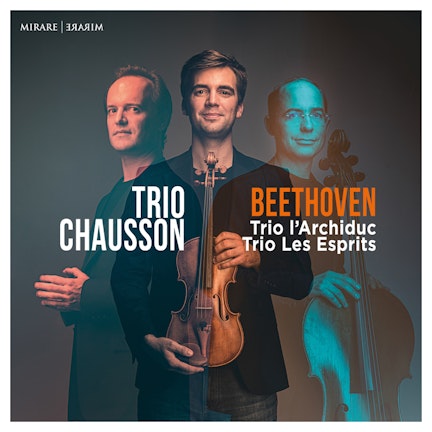
Beethoven: Trio L'Archiduc & les Esprits
Beethoven, L.: Piano Trios (Complete)
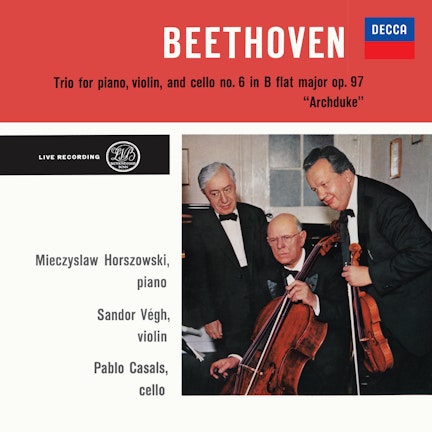
Beethoven: Trio No. 7 in B-Flat Major, Op. 97 'Archduke'
Beethoven: The Piano Trios
Beethoven: Archduke & Ghost Piano Trios
Beethoven: Complete Works for Piano Trio, Vol. 3
Beethoven: Complete Works for Piano Trio, Vol. 2
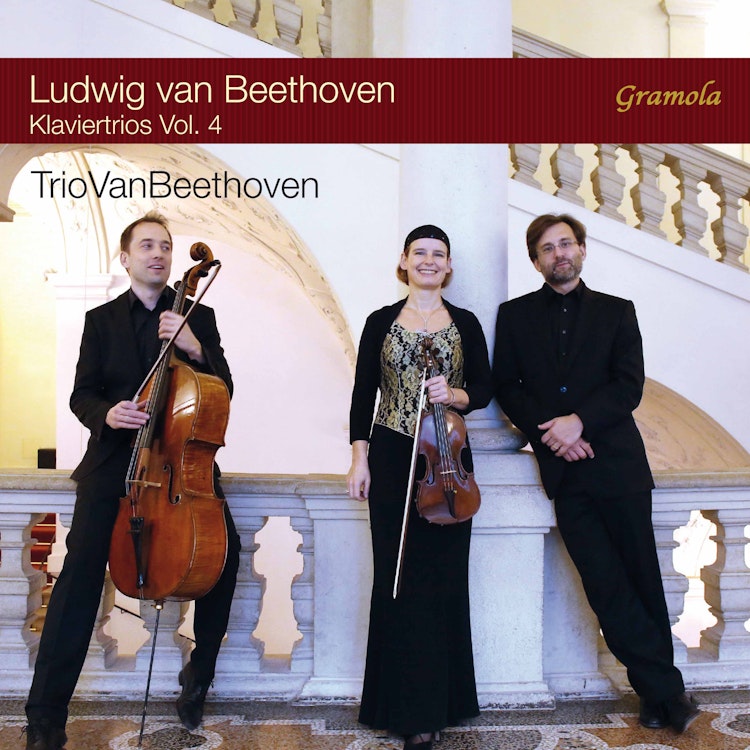
Beethoven: The Complete Piano Trios Vol. 4
Beethoven: Piano Trios Opp.1 No.1,11,70, No.1 & 97