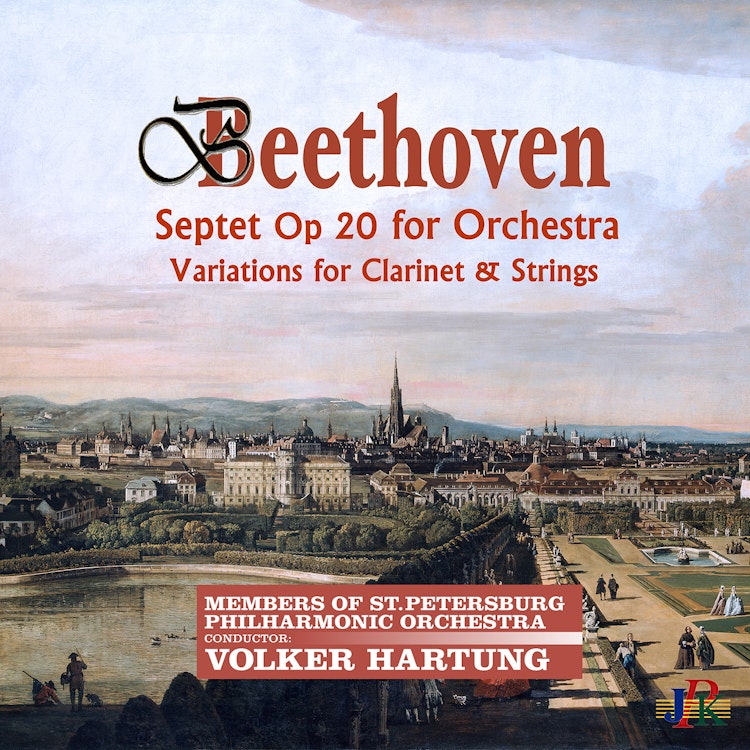
Beethoven: Septet in E-Flat Major, Op. 20 and Andante & Variations in D Major, WoO 44b
11/4/2016, 7 Tracks, 43:59
Featuring
Volker Hartung
Oleg Tchastikov
Artem Mikaelyan
Alexej Sviatlovsky
Dmitry Krasnik
Miltos Mumulides
St. Petersburg Academic Symphony Orchestra
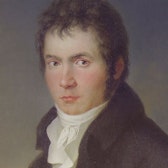
Ludwig van Beethoven
Did you know?
1/7
Composer Biography
Ludwig van Beethoven, unlike composers before him, was a free and highly respected artist who understood how to sell his works at a high price.
Composition History
Beethoven's Septet in E flat major op. 20 was sketched in 1799 and premiered with great success on December 20, 1799, at the Palais of Prince Joseph von Schwarzenberg in Vienna.
Performer Biography
Miltos Mumulides, the principal clarinetist of the Cologne New Philharmonic, arranged Beethoven's Andante and Variations for Clarinet and String Orchestra, which is featured on this album.
Composer Biography
Beethoven wrote several works for mandolin and piano in 1796 for Countess Josephine von Clary-Aldringen, a known singer and mandolin player, during a visit to Prague.
Cultural Impact
The Septet in E flat major op. 20 was one of Beethoven's most popular works, leading to numerous arrangements, including one by Beethoven himself as a trio.
Interpretation
Conductor Arturo Toscanini arranged Beethoven's Septet for full string orchestra for his 1939 performances in New York, using 10 violins, 5 violas, 5 cellos, and 3 double basses to balance the strong winds.
Compositional Technique
Beethoven's Septet features an unusual instrumentation with single clarinet, horn, and bassoon, rather than the customary pairs of wind instruments, and gives important solo passages to the clarinet.
You might also enjoy...
Mozart: Divertimento in E-Flat Major, K. 563
Mozart: Divertimento in E-Flat Major, K. 563
Mozart: Piano Quintet, K. 452; Clarinet Trio, K. 498 "Kegelstatt"
Kreutzer: Grand Septet, Op. 62; Beethoven: Septet, Op. 20
Mozart: 5 Divertimentos, K. Anh. 229
Beethoven: Chamber Music for Winds, Vol. 3
Schubert, Haydn: Piano Trios / Mozart: Piano Quartet