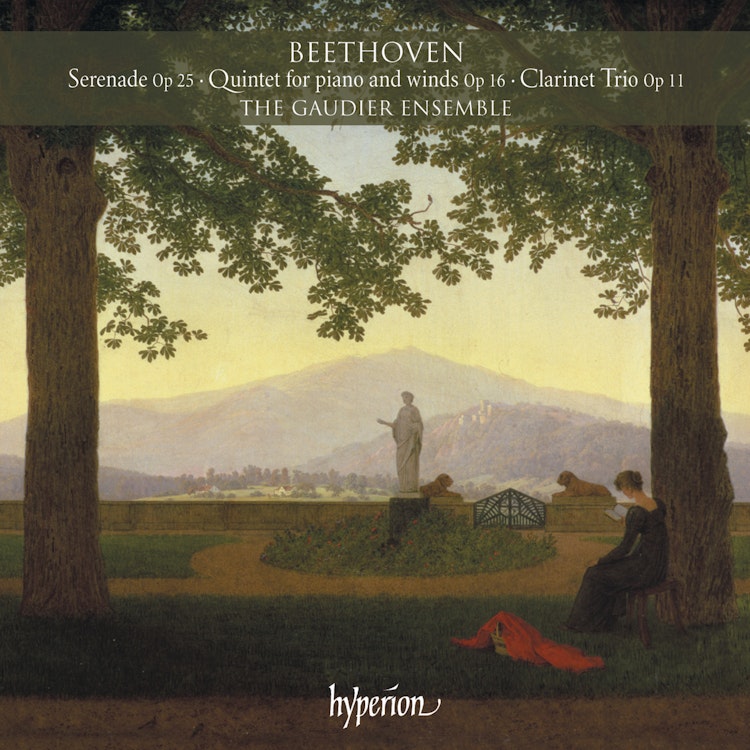
Beethoven's Quintet in E flat major, Op. 16, was likely composed in Berlin in 1796 and first performed in Vienna on April 6, 1797.
Composer Biography
At 21, Beethoven moved from Bonn to Vienna, then a major musical capital, to study composition with Haydn and establish himself as a composer-performer.
Performer Biography
The Gaudier Ensemble is a group of outstanding European musicians who perform and record chamber music, with members working in major orchestras like the BBC Symphony Orchestra and the Philharmonia.
Compositional Technique
Beethoven's Quintet in E flat major, Op. 16, sets the piano and wind quartet in opposition, sometimes resembling a chamber concerto for piano and wind.
Composition History
The Trio in B flat major, Op. 11, was composed in 1797-98 for the then-rare combination of clarinet, cello, and piano, but also designed for a conventional piano trio.
Composition History
The theme for the variation finale of the Trio in B flat major, Op. 11, was suggested by Viennese clarinettist Joseph Bähr and came from Joseph Weigl's comic opera L'amor marinaro.
Critical Reception
Upon its publication, the influential Allgemeine musikalische Zeitung criticized Beethoven's Trio in B flat major, Op. 11, as 'difficult' and 'unnatural'.
You might also enjoy...
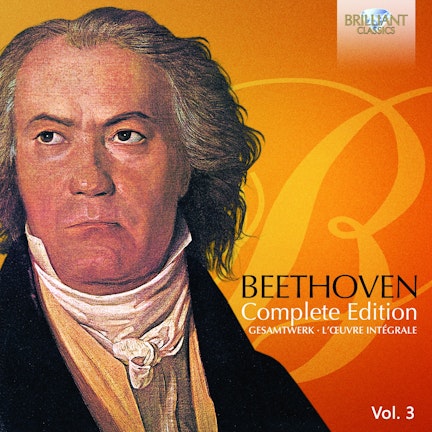
Beethoven Edition, Vol. 3
Martha Argerich - Chamber
Brahms, Weber & Beethoven: Trios
Beethoven/Schubert: Piano Trios
Vintage Viennese
Beethoven: Clarinet Trios
Spohr: Quintett in C Minor, Op. 52 & Oktett in E Major, Op. 32
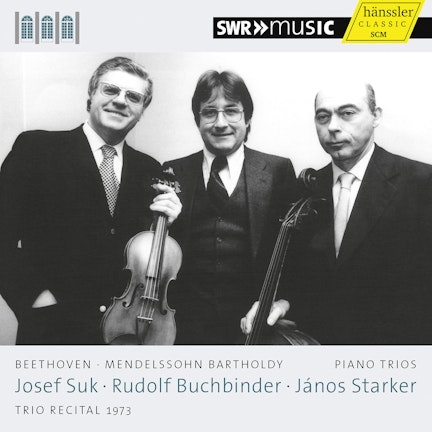
Trio Recital 1973
Passionate Diversions: A Celebration of Ellen Taaffe Zwilich
Weber, Farrenc & Kuhlau: Chamber Music
Block: Chamber Works
Beethoven & Ries: Clarinet Trios
Beethoven: Sonatina for Viola and Cello, Duo for Viola and Cello, et. al