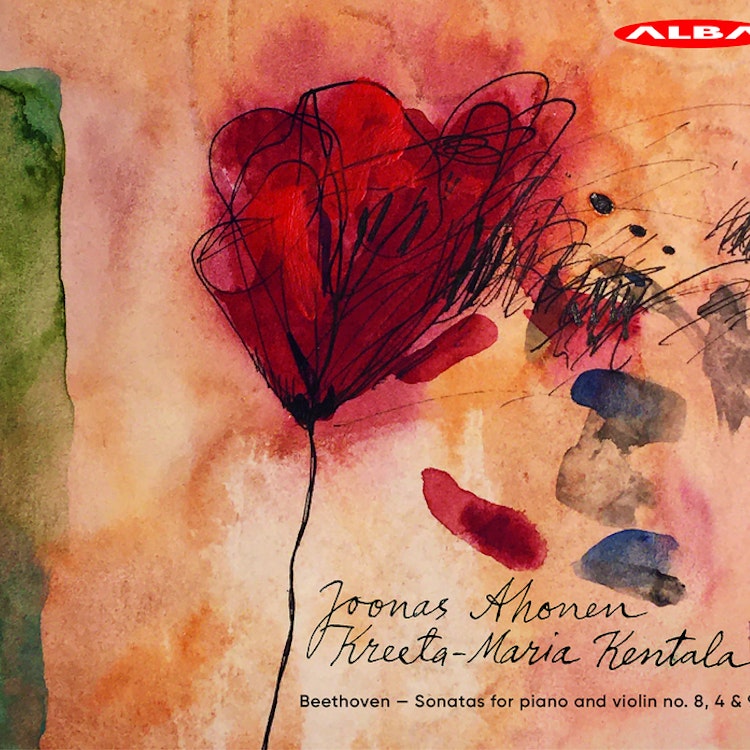
Beethoven – Sonatas for piano & violin No. 8, 4 & 9
12/8/2023, 9 Tracks, 1:10:16
Featuring
Kreeta-Maria Kentala
Joonas Ahonen
Ludwig van Beethoven
Did you know?
1/7
Composition History
Beethoven's famous 'Kreutzer' Sonata (No. 9 in A Major) was originally dedicated to the violinist George Bridgetower, but after an argument, Beethoven tore up the dedication and reassigned it to Rodolphe Kreutzer, who never played it.
Composer Biography
Beethoven, who arrived in Vienna as a 21-year-old master pianist in 1792, quickly established an excellent position in the city's musical life.
Historical Context
In Beethoven's time, Vienna's cultural life was largely run by a small aristocracy of just over 300 families, with music divided between opera and private concerts.
Composition History
Most of Beethoven's sonatas for piano and violin, including those on this album, were written for his friend, the violinist Ignaz Schuppanzigh, and himself.
Compositional Technique
Beethoven revolutionized the sonata for piano and violin by treating the violin as an almost equal partner to the piano, a bold departure from the piano-dominated French duo sonatas of his time.
Composer's Artistic Vision
Beethoven aimed to reform music, preferring musicians to play at the limits of their skill to create 'friction' in interpretation, and considered a work successful if it surprised or confused the audience.
Instruments
The piano underwent rapid development in the early 19th century; when Beethoven began composing, it had five octaves, but by his death, it had expanded to six and a half octaves with varying numbers of pedals.
You might also enjoy...
Mozart: The Violin Sonatas, Vol.2
Mozart: Sonatas & Variations for Piano & Violin, Vol. 1