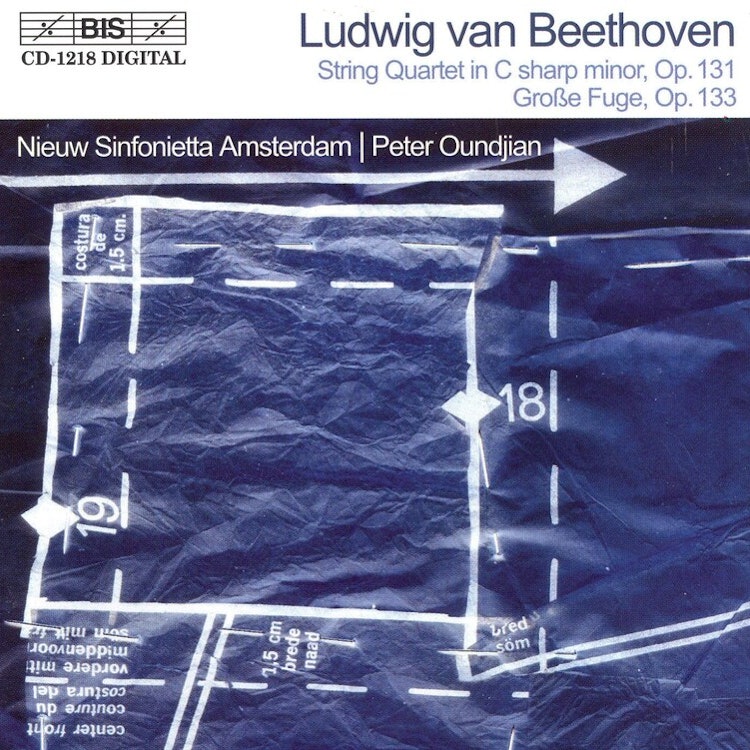
Beethoven's Große Fuge (Op. 133) is considered the most difficult music he ever wrote, comprising three distinct fugues, each of considerable length.
Performer Biography
Peter Oundjian, the conductor on this album, was previously the first violinist of the Tokyo Quartet and has conducted numerous orchestras worldwide since his official debut in 1995.
Interpretation
The Nieuw Sinfonietta Amsterdam developed its own performance material for this recording, drawing on conductor Peter Oundjian's extensive experience as first violinist of the Tokyo String Quartet.
Cultural Impact
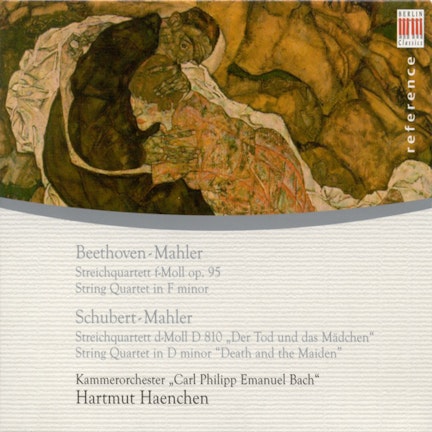
Gustav Mahler, a renowned conductor and composer, admired the power of Beethoven's late string quartets so much that he believed they should be performed by a full string orchestra.
Composer's Artistic Vision
Beethoven considered his String Quartet in C sharp minor, Op. 131, to be the greatest of his last compositions, showcasing innovation in both form and freedom.
Critical Reception
The Große Fuge (Op. 133) was initially considered too modern to be the finale of Beethoven's Op. 130 quartet and was published separately.
Composition History
Beethoven wrote five extraordinary string quartets in the final three years of his life, which are considered some of the most astonishing artistic creations of all time.
You might also enjoy...
Beethoven (arr.Mahler): String Quartet No.11 / Brahms (orch.Schoenberg): Piano Quartet No.1
Mouzas: Music for an Imaginary Film / Prima Materia / Monologue / Thought Forms / Lucid Dream