Beethoven planned three quartets in 1823 in response to a commission from music enthusiast Prince Galitzin, but was busy with his Ninth Symphony.
Composer Biography
Beethoven's severe illness and deafness, which are now known to have been caused by lead poisoning, dramatically impacted his life and social interactions.
Composition History
Beethoven's original finale for the Quartet Op. 130, the 'Great Fugue' (Op. 133), caused such consternation that his publisher and a violinist asked him to write a more conciliatory last movement.
Compositional Technique
Beethoven's late string quartets, including Op. 132 and Op. 130/133, depart from the classical four-movement form, with Op. 132 having five movements and Op. 130/133 having six.
Interpretation
The Tetzlaff Quartett chose to record Op. 130 with the 'Great Fugue' (Op. 133) as its actual finale, considering it ideally rounds off the work's musical plot.
Performer Biography
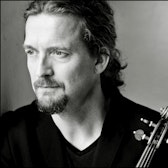
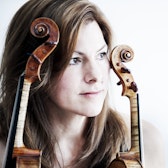
The Tetzlaff Quartett, praised for its 'dramatic, energetic playing of clean intensity' by The New York Times, was founded in 1994 by Christian and Tanja Tetzlaff, Hanna Weinmeister, and Elisabeth Kufferath.
You might also enjoy...
Beethoven: String Quartet No. 15 in A Minor, Op. 132: V. Allegro appassionato - Presto
Beethoven: String Quartet No. 14 in C-Sharp Minor, Op. 131