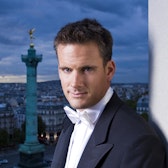
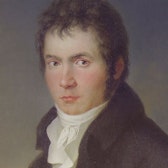
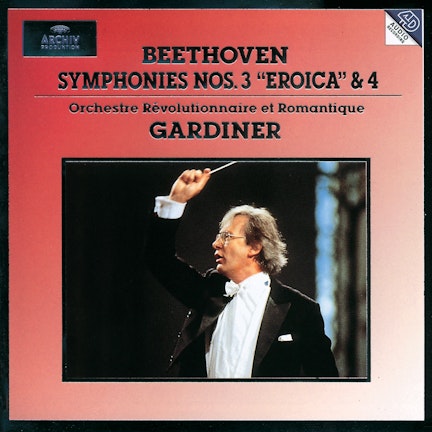
Conductor Philippe Jordan believes that Prometheus, who brought fire to mankind, is the true hero of Beethoven's 'Eroica' Symphony, rather than Napoleon.
Compositional Technique
Beethoven's First Symphony opens with an unprecedented dissonant dominant seventh chord that leads into the 'wrong' key of F major, rather than the expected C major.
Performer Biography
Philippe Jordan, the conductor on this album, is the current Music Director of both the Wiener Symphoniker and the Opéra national de Paris.
Composition History
Beethoven used the same theatrical effect of a surprising opening chord in his ballet music 'The Creatures of Prometheus' op. 43, which premiered a year after his First Symphony.
Historical Context
The 'Eroica' Symphony's second movement was the first time a funeral march was introduced into a symphonic structure.
Critical Reception
An early critic of Beethoven's 'Eroica' Symphony found it 'glaring and bizarre,' with too much disorder, making the principle of unity almost completely lost.
Notable Performances
The Wiener Symphoniker, the orchestra on this recording, premiered works now considered staples of the repertoire, including Anton Bruckner's Ninth Symphony and Arnold Schönberg's Gurre-Lieder.