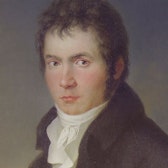
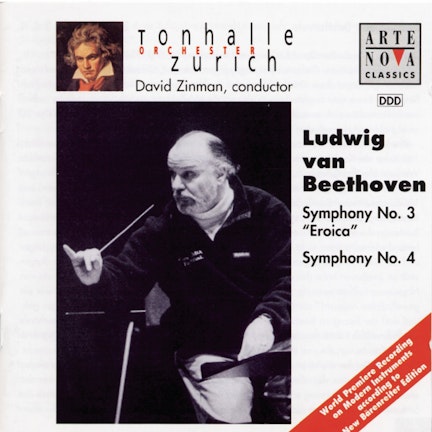
With his Third Symphony, Beethoven established a new aesthetic for the symphonic form, abandoning its association with entertainment to become an art form for expressing ideas, reflected in its final title 'Sinfonia eroica'.
Performer Biography
Wojciech Rajski, the conductor, founded the Polish Chamber Philharmonic Orchestra - Sopot in 1980 and has conducted at many important festivals worldwide.
Critical Reception
The 'Eroica' Symphony presented significant challenges to contemporary listeners, with one critic describing it as 'a very extensive piece of bold, wild fantasy' and another noting it required an audience that 'can at least sit up and take serious notice'.
Compositional Technique
The finale of Beethoven's Third Symphony is an unconventional sequence of variations based on a theme he borrowed from his ballet, 'The Creatures of Prometheus' op. 43.
Composer Biography
Beethoven's attitude towards Napoleon changed dramatically when Napoleon crowned himself emperor, leading Beethoven to exclaim, 'Now he will trample all the rights of man underfoot just to indulge his own ambition'.
Performer Biography
The Polish Chamber Philharmonic Orchestra - Sopot, founded by Wojciech Rajski in 1982, started as a 20-man string orchestra and has since grown to over 50 members.
Composition History
Beethoven initially intended his Third Symphony as a homage to Napoleon Bonaparte, titling it 'Sinfonia grande intitolata Buonaparte'.
You might also enjoy...
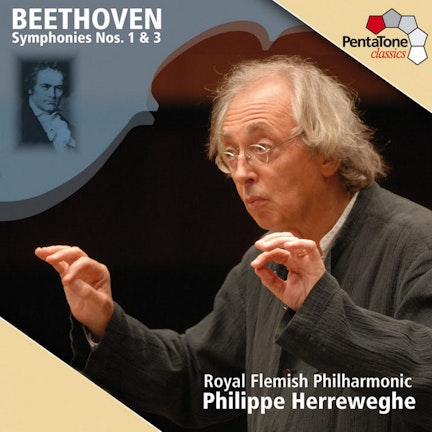
Beethoven: Symphonies Nos. 1 & 3
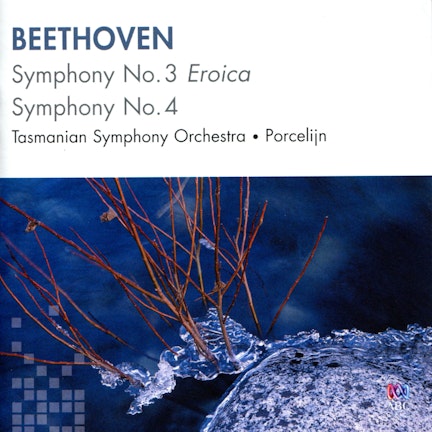
Beethoven: Symphony No. 3, Symphony No. 4
Beethoven: Symphonies Nos. 1 & 3
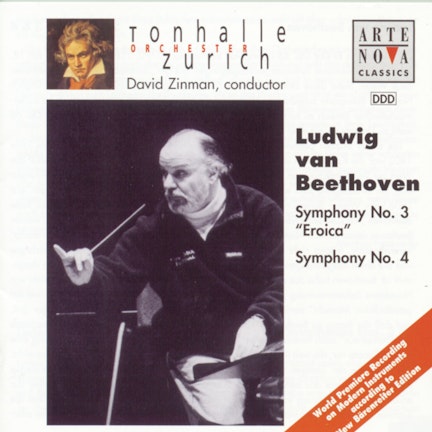
Beethoven: Symphonies Nos. 3 & 4
Beethoven: Symphonies Nos. 3 and 4
Beethoven: Symphonies Nos.3 "Eroica" & 4
Beethoven: Symphonies Nos. 3 and 8
Beethoven: Symphonies Nos.1 & 3
Beethoven: Symphonies Nos. 3 and 8
Beethoven: Symphonies Nos. 3 and 8
Beethoven, L. Van: Symphonies Nos. 3, "Eroica" and 8