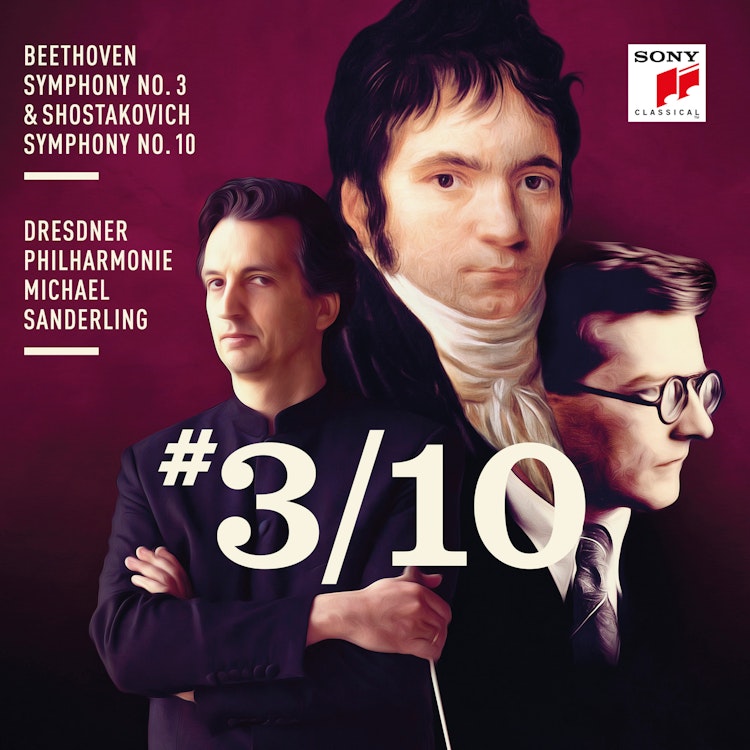
Beethoven Symphony No. 3 & Shostakovich Symphony No. 10
3/31/2017, 8 Tracks, 1:44:49
Featuring
Michael Sanderling
Dresdner Philharmonie
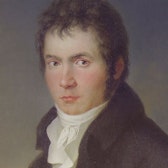
Ludwig van Beethoven
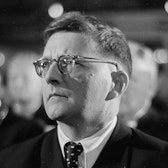
Dmitri Shostakovich
Did you know?
1/7
Composer's Artistic Vision
Beethoven's Third Symphony, 'Eroica', was initially conceived as a portrait of Napoleon Bonaparte, but his admiration turned to contempt when Napoleon crowned himself emperor.
Composition History
The 'Marcia funebre' in Beethoven's 'Eroica' Symphony was rumored to be inspired by the false report of Lord Nelson's death in 1798 or the death of Scottish general Sir Ralph Abercromby in 1801.
Composition History
Shostakovich completed his Tenth Symphony in October 1953, intending it as a monumental "tombstone" to dictator Josef Stalin, who had died earlier that year.
Composer Biography
Beethoven, in his 1802 Heiligenstadt Testament, stated that only art prevented him from abandoning the world, as he felt compelled to produce all that he felt within him.
Compositional Technique
Shostakovich embedded his monogram, DSCH (D-E flat-C-B), into the earlier movements of his Tenth Symphony, sometimes hidden or distorted, and screaming out at the end.
Composer's Artistic Vision
Shostakovich designed many of his symphonies as coded messages, with his Tenth Symphony interpreted as an account of the terrors of Stalin's tyrannical rule.
Compositional Technique
Beethoven's 'Eroica' Symphony's final movement is based on a melodically memorable contredanse from his ballet The Creatures of Prometheus, with the bass line subjected to contrapuntal variations.