Transcribers of symphonic works for wind band often transposed pieces down due to the limited upper range of oboes and clarinets compared to flutes and violins.
Composition History
Beethoven initially opposed unauthorized arrangements of his works, demanding publishers declare transcriptions on the title page to protect his reputation and prevent public deception.
Historical Context
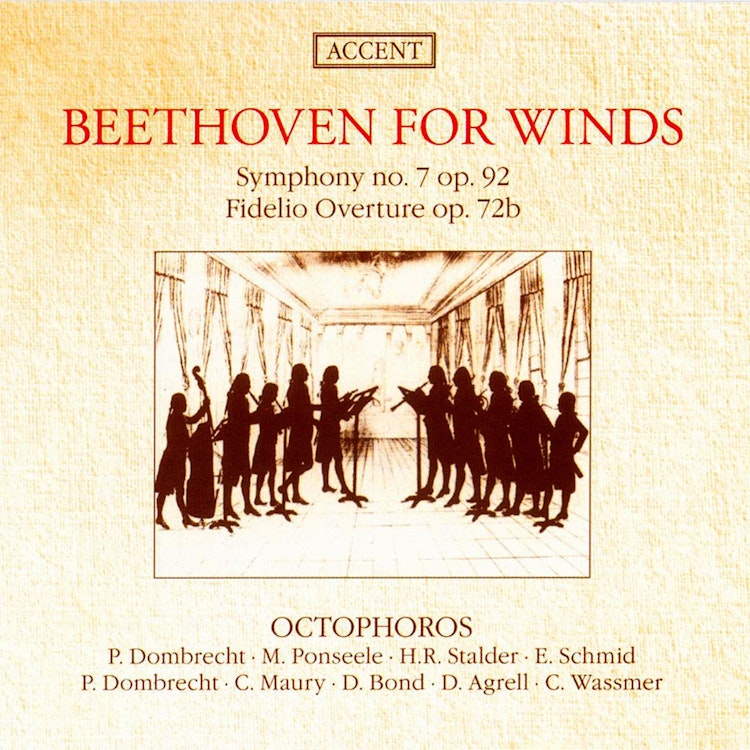
Around 1780, Vienna became a leader in a new musical fashion, with wind ensembles (Harmonie) playing arrangements of arias from recent operas, as depicted in Mozart's opera 'Don Giovanni'.
Instruments
The 'Harmonie' was a popular wind ensemble in Vienna, typically an octet of 2 oboes, 2 clarinets, 2 horns, and 2 bassoons, sometimes augmented with a deep bass instrument.
Historical Context
In 18th-century Vienna, arrangements of orchestral works for smaller ensembles like piano solo or piano trio were essential for disseminating compositions, as not everyone could afford a full orchestra.
Composer's Artistic Vision
Beethoven and his contemporaries viewed arrangements as different 'suits of clothes' for a piece of music, adapting it to various circumstances without implying a value judgment.
Compositional Technique
Arrangers of Beethoven's works for wind band, such as Wenzel Sedlak, made significant cuts, including removing an entire development section from the last movement of the Seventh Symphony.
You might also enjoy...
Spohr, Onslow: Nonets
Haydn: String Quartets Op. 74 - Folk Music from Scotland
Gran Partita
Spohr: String Sextet in C Major, Op. 140 & Nonet in F Major, Op. 31
Spohr: Nonetto In F Major, Op. 31 / Martinu: Nonetto (1959)
Dvorák & Haydn: String Arrangements
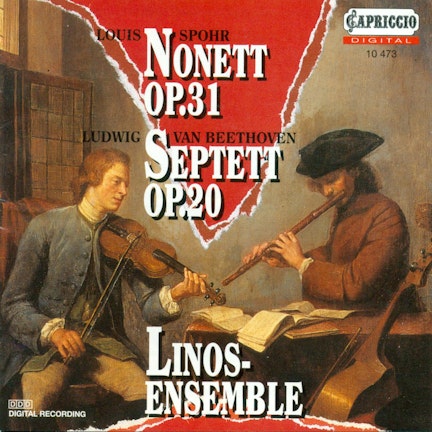
Spohr, L.: Nonet, Op. 31 / Beethoven, L. Van: Septet, Op. 20