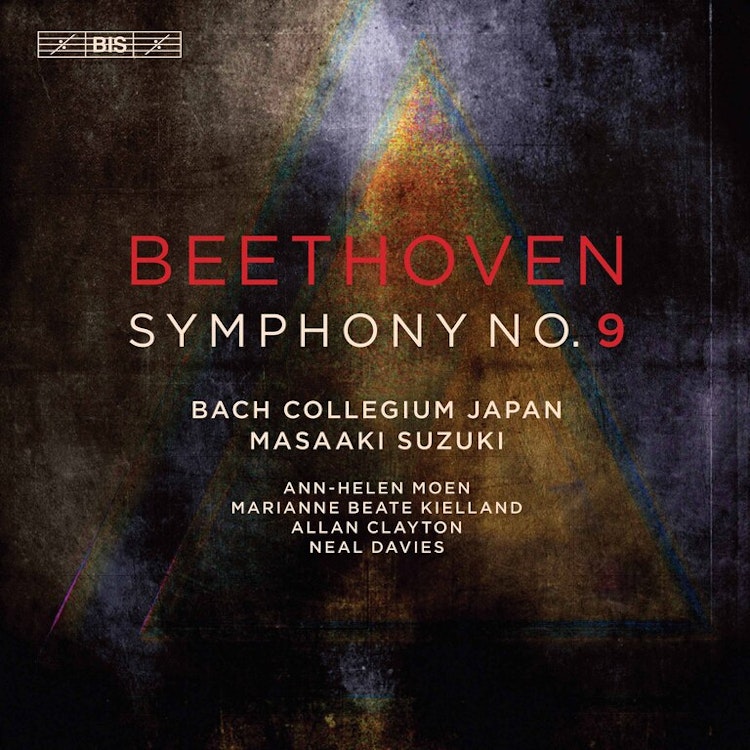
Beethoven: Symphony No. 9 in D Minor, Op. 125 "Choral" (Live)
10/4/2019, 11 Tracks, 1:06:28
The premiere of Beethoven's Ninth Symphony, with its joyful choral finale, was a landmark moment in musical and cultural history. Through using period instruments and performance styles, Bach Collegium Japan and Masaaki Suzuki aim to capture a sense of that famed performance, joined by a quartet of vocal soloists including tenor Allan Clayton.
Featuring
Masaaki Suzuki
Ann-Helen Moen
Marianne Beate Kielland
Allan Clayton
Neal Davies
Bach Collegium Japan
Bach Collegium Japan Chorus
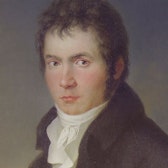
Ludwig van Beethoven
Did you know?
1/7
Composer's Artistic Vision
Beethoven had considered setting Schiller's "Ode to Joy" since his youth, with early attempts in his Bonn period remaining incomplete.
Composition History
Beethoven planned to compose another pair of symphonies, including a "Second D minor symphony" and a "Symphony in D minor - 3rd Symphony," while working on his Seventh and Eighth Symphonies in 1811-12.
Performer Biography
Masaaki Suzuki, the conductor, founded the Bach Collegium Japan in 1990 to introduce Japanese audiences to period instrument performances of Baroque works.
Composer Biography
Beethoven's increasing deafness and declining health were significant factors in his slower compositional process, as new works demanded more time and effort.
Notable Performances
At the premiere of the Ninth Symphony in Vienna on May 7, 1824, Beethoven, due to his deafness, did not notice the audience's enthusiasm until the alto soloist Caroline Unger turned him to face them.
Composition History
Early sketches for the Ninth Symphony, dating back to 1815, include the scherzo theme, which was initially conceived as a fugue and not yet at a very fast tempo.
Composition History
The specific idea of setting Schiller's "Ode to Joy" in the final movement of the Ninth Symphony only matured in 1822-23, despite earlier sketches.
You might also enjoy...
Beethoven: Symphony No. 9 "Choral"
Beethoven: Symphony No. 9 in D Minor "Choral"
Beethoven: Symphony No.9
Beethoven: Symphony No.9, 'Choral'
Beethoven: Symphony No. 9 in D Minor, Op. 125 "Choral"
Beethoven: Symphony No. 9 in D Minor, Op. 125 "Choral"
Furtwangler: Beethoven Symphony No. 9
Beethoven: Symphony No. 9 in D Minor, Op. 125 "Choral" (Live)