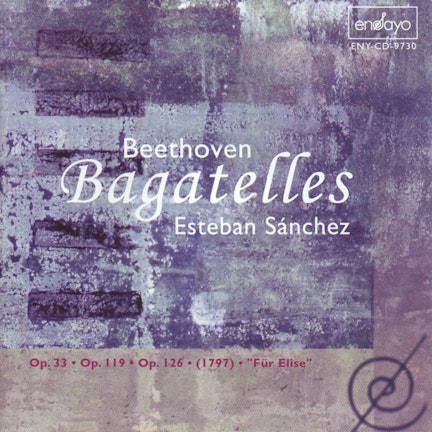
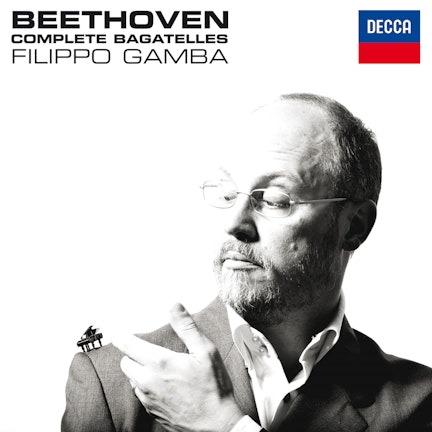
The famous 'Für Elise' (WoO59) was likely intended for Therese Malfatti, to whom Beethoven was romantically attached, despite a lost manuscript inscription suggesting 'Elise'.
Composition History
The first volume of Beethoven's Bagatelles, Op. 33, published in 1803, included pieces dating back to his early years in Bonn, with one optimistically assigned to 1782 when he was twelve.
Compositional Technique
Unlike his previous sets, Beethoven designed the Six Bagatelles, Op. 126, as a unified cycle, with alternating lyrical and dramatic pieces, and keys forming a descending chain of thirds.
Composition History
After Peters' rejection, Beethoven sent his Op. 119 Bagatelles to his former pupil Ferdinand Ries in London, where they were published by Clementi as 'Trifles for the Piano Forte'.
Composition History
Beethoven composed Bagatelles, which he called 'Kleinigkeiten' (trifles), for piano throughout his career, keeping them in a folder for eventual publication.
Composition History
The Six Bagatelles, Op. 126, were Beethoven's last work for piano, which he described as "probably the best pieces of this kind I have written."
Composition History
Beethoven's Op. 119 Bagatelles were initially rejected by Leipzig publisher Carl Friedrich Peters, who found them "too small" and unsuitable for both advanced and budding pianists.