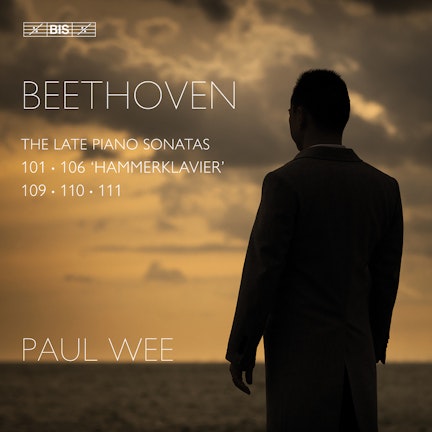
The performers aimed for innovative reinterpretations of Beethoven's late sonatas, using Schenkerian analysis as the main interpretive lens and moving beyond traditional approaches.
Compositional Technique
Beethoven's Sonata Op. 101 is characterized by a new poetic subjectivity and organic cohesion, with its tonal structure based on a unifying motif of a descending tetrachord.
Composer's Artistic Vision
The album's conceptual motif of "darkness and light" was inspired by Carl Bloch's painting "The Shepherds and the Angel," which resonated with the contrasting movements in Beethoven's sonatas.
Interpretation
This album is the outcome of an artistic research project, "Beethoven Reconstructed," which applies Schenkerian analysis to the interpretation of Beethoven's piano works.
Composition History
Beethoven's monumental "Hammerklavier" Sonata, Op. 106, was first performed by Franz Liszt, a Hungarian virtuoso pianist and composer, some 20 years after its composition.
Recording & Production
The album features all five of Beethoven's late sonatas, from Op. 101 to Op. 111, expanding the initial scope of the "Beethoven Reconstructed" project.
You might also enjoy...
Beethoven: The Late Piano Sonatas
Alan Hobbins Plays Beethoven
Beethoven: Piano Sonatas, Vol. 5
Beethoven Cycle, Vol. 11
Beethoven: Sonatas for Piano No. 14, 8, & 23
Gorlatch: Piano Sonatas (Beethoven)
Beethoven: Piano Sonatas Op. 109, 110, 111
Beethoven: Piano Sonatas Nos.11, 12 & 21 "Waldstein"
Beethoven: Piano Sonatas Nos 27, 28 & 29, "Hammerklavier"