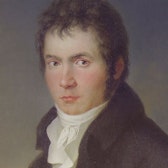
Beethoven's friendship with violinist Ignaz Schuppanzigh, who led a quartet that premiered many of Beethoven's works, lasted until the composer's death.
Compositional Technique
Beethoven's late quartets experiment with form, with only two adhering to the traditional four-movement structure, while others expand to five, six, or seven movements.
Composer's Artistic Vision
Beethoven's 'late' quartets, composed between 1824-26 when he was deaf, represent his final major project and feature a new lyricism, renewed interest in fugue, and inwardness of expression.
Composition History
Beethoven's patrons, like Prince Carl Lichnowsky and Count Andreas Razumovsky, not only supported his work but also played string instruments themselves, with Razumovsky sometimes playing second violin in Schuppanzigh's quartet.
Performer Biography
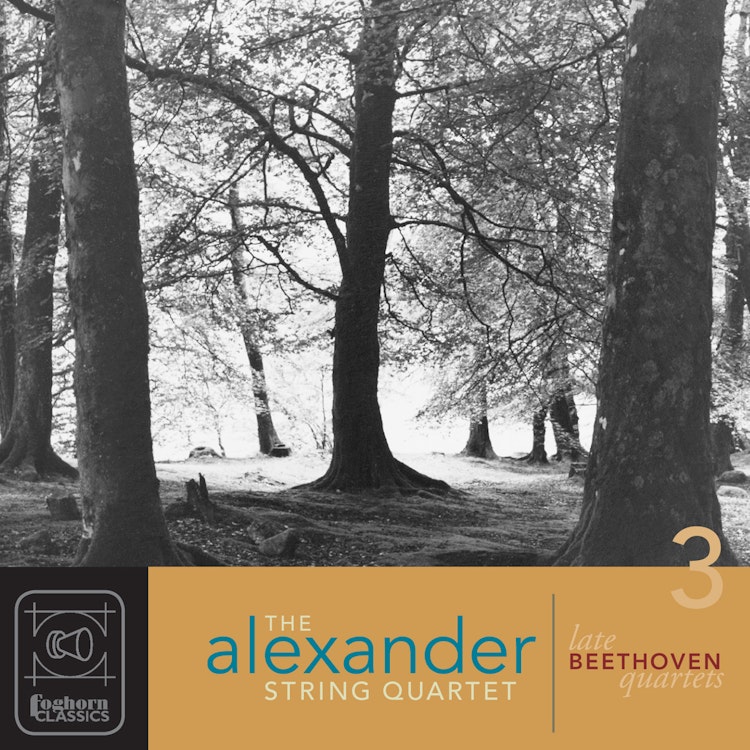
The Alexander String Quartet, formed in 1981, has performed in major music capitals across five continents and is recognized as a premier ensemble of its generation.
Historical Context
Ignaz Schuppanzigh's quartet helped transform string quartets from music for home performance into 'concert music' through early public performances in 1804.
Composer Biography
Beethoven, known for his piano virtuosity, also played violin and viola as a youth, performing in orchestras in Bonn.
You might also enjoy...
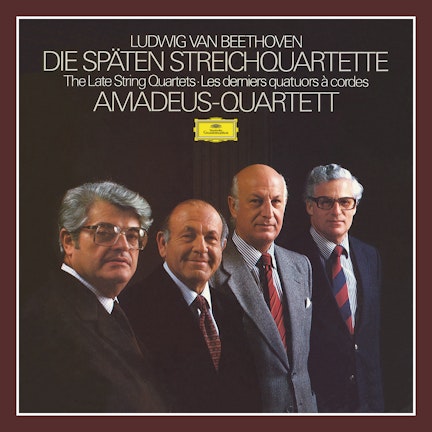
Beethoven: The Late String Quartets
Beethoven: The Late String Quartets
Beethoven: The Late Quartets, Opp. 127, 130, 131, 132, 133 (Grosse Fuge) & 135