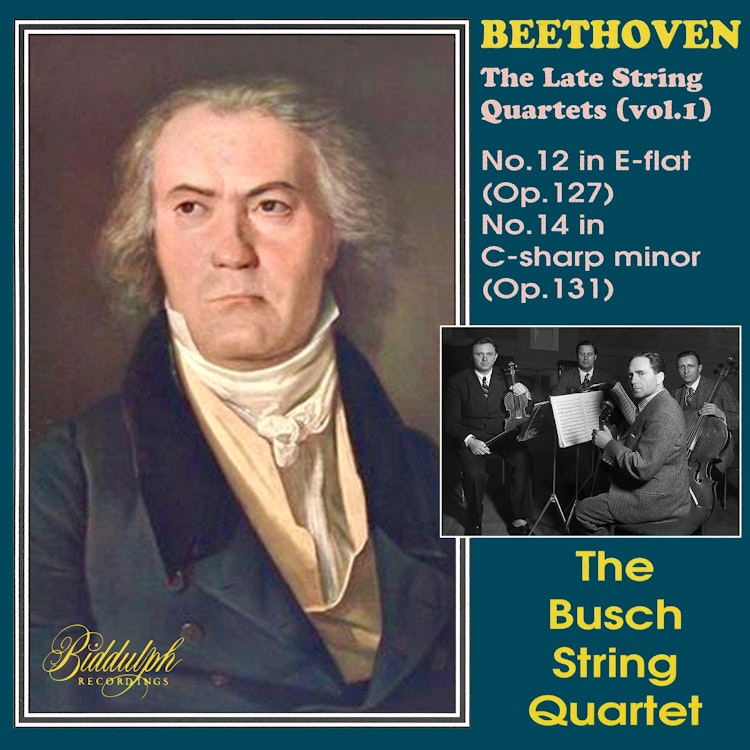
The Busch Quartet, with pianist Rudolf Serkin as their 'perfect fifth', performed a wide range of chamber music, including Classical masterpieces, Romantic works by Brahms and Dvořák, and modern pieces by composers like Reger and Ravel.
Performer Biography
The Busch Quartet was founded in Berlin in May 1919, with Adolf Busch on violin, Emil Bohnke on viola, Karl Reitz as temporary second violinist, and Paul Grümmer on cello.
Interpretation
Adolf Busch's inner vision and mastery of transition were key to the Busch Quartet's performances, particularly evident in their recording of Beethoven's C-sharp minor Quartet, despite the challenges of 78 rpm recording.
Historical Context
The Busch Quartet left Germany due to the rise of Nazism, with Adolf and Frieda Busch moving to Basel in 1927, and the quartet giving their last concert under Hitler's tyranny on April 1, 1933.
Performer Biography
The Busch Quartet confined its appearances to Britain, Austria, Italy, and Switzerland after their US debut in 1933, and later emigrated to the US when World War II broke out.
Interpretation
The Busch Quartet's performance of Beethoven's Op. 127 is noted for its precise rhythmic detail, articulation, and the gusto with which they address Beethoven's accents and dance material.
You might also enjoy...
Beethoven: The String Quartets in under 10 minutes