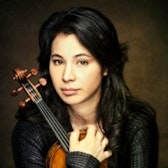
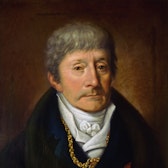
Conductor Reinhard Goebel and the WDR Sinfonieorchester continue their acclaimed examination of “Beethoven’s World” – featuring lesser-known music written by the famed composer’s contemporaries. This third album in the series features a set of orchestral variations by Salieri, Jan Václav Voříšek’s pioneering Symphony in D major, and a double concerto for violin and piano by the young Johann Nepomuk Hummel. The soloists are violinist Mirijam Contzen and pianist Herbert Schuh.
Featuring
Reinhard Goebel
Mirijam Contzen
Herbert Schuch
WDR Sinfonieorchester Köln
Antonio Salieri
Johann Nepomuk Hummel
Jan Václav Hugo Voříšek
Did you know?
1/7
Compositional Technique
Hummel's Double Concerto in G Major, op. 17, draws inspiration from Mozart's keyboard concertos, particularly those from 1784, for its themes and dialogues.
Composer Biography
Johann Nepomuk Hummel, a famous pianist and student of Mozart, signed a contract as Prince Nikolaus Esterházy's concertmaster in Eisenstadt in 1804.
Recording & Production
This album was recorded in Cologne, Germany, at the WDR Funkhaus, Klaus-von-Bismarck-Saal, between June 14-21, 2019.
Composition History
Voříšek's only symphony, the Symphony in D Major, op. 23, from 1823, is considered a direct counterpart to Schubert's B minor Symphony from the same year.
Compositional Technique
Salieri's Variations on 'La Follia di Spagna' use the harp in unconventional ways, including a surprising entry with rushing scales and brief appoggiaturas.
Composer Biography
Jan Václav Voříšek, born in 1791 (the year Mozart died), studied mathematics, philosophy, and law in Prague before becoming a successful pianist in Vienna.
Composition History
Antonio Salieri's 26 Variazioni sull'aria 'La Follia di Spagna' was written in 1815 for insertion into Handel's 'Alexander's Feast', which was performed in Vienna.
You might also enjoy...
Leonard Bernstein Conducts Ives (Remastered)
MOZART, W.A.: Symphonies Nos. 29 and 35 / Bassoon Concerto, K. 191 / Andante in C major / Overture to La betulia liberata (Concerto Koln)