Anton Joseph Hampel, a colleague of Knechtel in Dresden, pioneered the use of hand-stopping, a technique where the right hand is inserted into the horn's bell to manipulate pitch and create new chromatic possibilities.
Historical Context
In the 18th century, Dresden was the most important center for horn performance and composition, partly because the city's trumpet guild forbade its members from playing the horn, allowing it to develop independently.
Album & Artwork
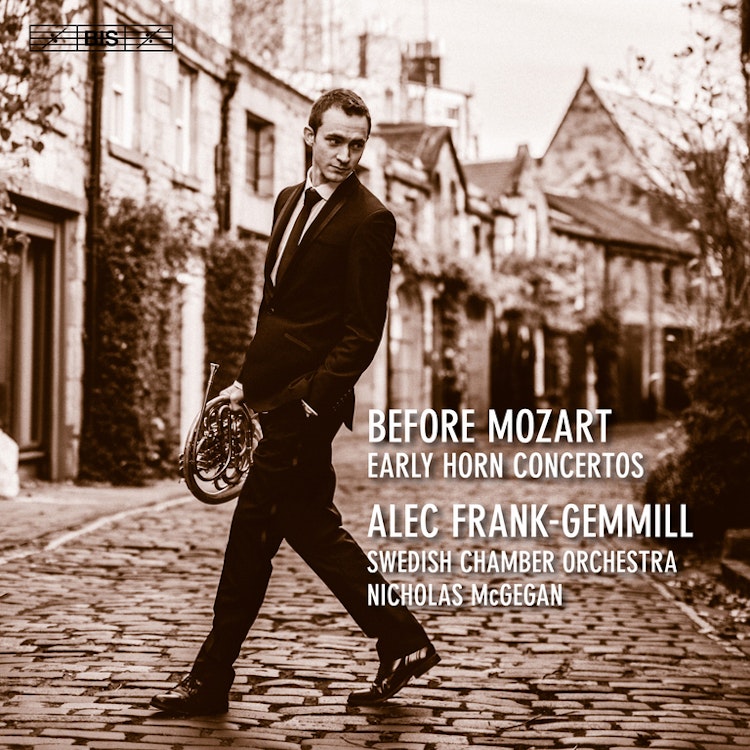
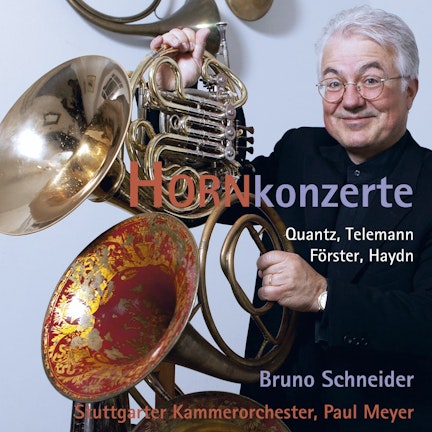
This album provides insight into early horn concertos from the 18th century, before Wolfgang Amadeus Mozart's famous works for the instrument.
Compositional Technique
Early horn concertos, such as those by Christoph Förster and Georg Philipp Telemann, sometimes featured movements in keys that were compositionally progressive, given the valveless horn's natural limitations.
Recording & Production
This recording was made possible by a Borletti-Buitoni Fellowship awarded to Alec Frank-Gemmill, the horn soloist on this album.
Historical Context
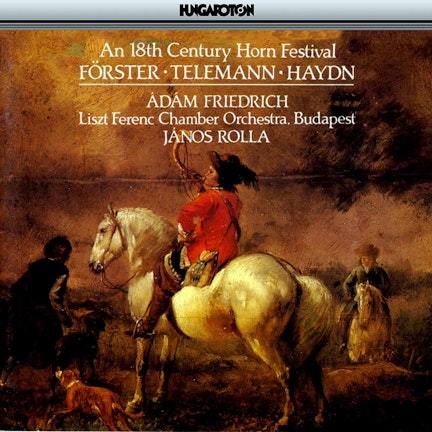
The hunting-horn first appeared on stage in the 17th century in works by composers like Lully and Cavalli, where its sound was used to illustrate hunting scenes.
Instruments
The works on this album explore the horn's 'clarino' range, which is the high register that first-horn players like Johann Georg Knechtel specialized in during the 18th century.