The Council of Trent established the polyphonic style of Pierluigi da Palestrina (c.1525-94) as the model for Catholic music, emphasizing textual intelligibility and edification of the faithful.
Compositional Technique
The musicians in Roman chapels adopted techniques like the 'dialogic' style mixing voices and instruments (stile concertato) and the spatial arrangement of multiple choirs (cori spezzati) from Venetian composers.
Historical Context
In 17th-century Rome, churches like St John Lateran, Santa Maria Maggiore, and San Luigi dei Francesi competed in splendor during patron saint celebrations, often featuring multiple vocal and instrumental choirs.
Composer Biography
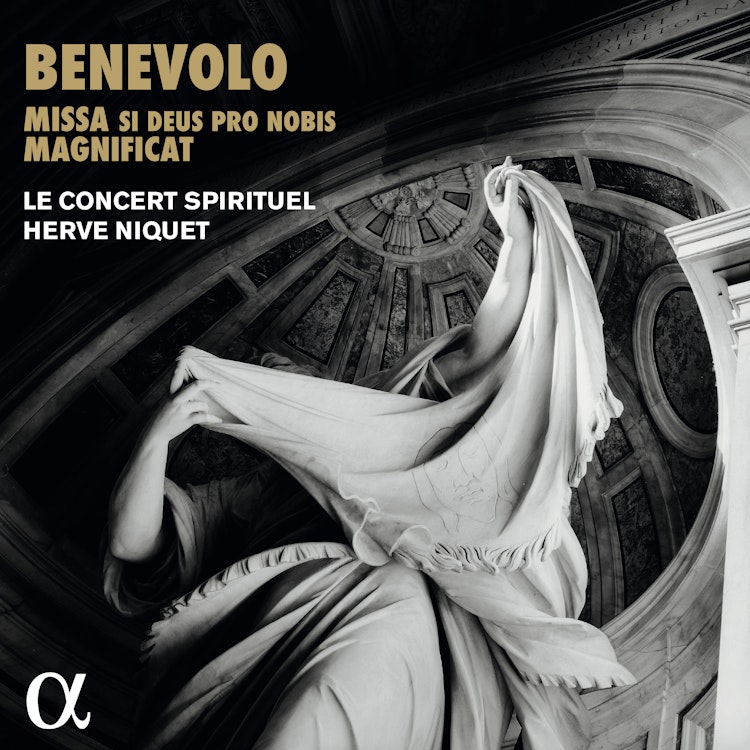
Orazio Benevolo (1605-1672), a remarkable creator of polychoral works, was the son of a French pastry chef who settled in Rome and became Maestro di Cappella at San Luigi dei Francesi before leading the Cappella Giulia at St Peter's.
Recording & Production
The conductor, Hervé Niquet, received several copied scores from Jean Lionnet, a researcher at the Centre de Musique Baroque de Versailles, which included works by Orazio Benevolo.
Historical Context
The 'Eternal City' of Rome experienced a renaissance in the second half of the 16th century, driven by the Counter-Reformation and the directives of the Council of Trent (1545-63).
Compositional Technique
To synchronize large, spatially separated ensembles, 'capi di coro' (choir leaders) would stand in front of each gallery, looking at each other to beat time, while musicians were positioned behind them.
You might also enjoy...
Ave Maria Kaiserin
Salve Regina
The World of Psalms
Weckmann: Sacred Concertos and Harpsichord Works
Philips & Dering: Motets
The Feast of San Rocco, Venice 1608
Saints and Sinners - The Music of Medieval and Renaissance Europe