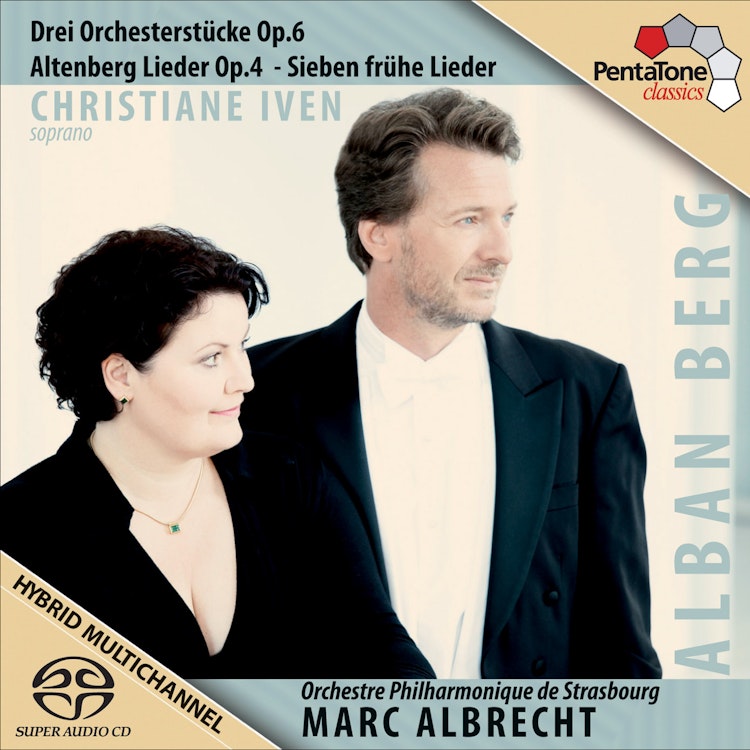
Christiane Iven, the soprano on this recording, began her career as a mezzo-soprano and won many international competitions before becoming a sought-after opera soprano.
Compositional Technique
The Three Orchestral Pieces, Op. 6, are described by Theodor Adorno as the 'most complicated of scores in existence' and feature an unusually large orchestral strength, including quadruple woodwinds and extensive percussion.
Composition History
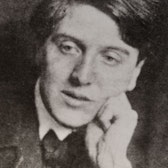
Alban Berg's Three Orchestral Pieces, Op. 6, were written as a reaction to criticism from his former teacher, Arnold Schoenberg, who was unhappy with Berg's earlier compositions.
Composition History
The premiere of Alban Berg's Altenberg Lieder, Op. 4, on March 31, 1913, provoked an enormous scandal.
Compositional Technique
Alban Berg's Seven Early Songs, originally composed between 1905-1908, were orchestrated in 1928, with each song instrumented differently to link the poems.
Composer's Artistic Vision
For the Altenberg Lieder, Op. 4, Alban Berg deliberately chose extremely concise texts from postcards sent by the poet Peter Altenberg, known as 'the Socrates of the Viennese coffee-houses'.
Historical Context
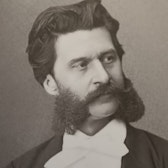
Alban Berg arranged Johann Strauss's waltz 'Wine, Women and Song' for a salon ensemble for a 'Society for Private Musical Performances' founded by Arnold Schoenberg, which aimed to present new works and raise donations.
You might also enjoy...
Berg & Strauss Jr.
Mahler - Bruckner
Haydn, Schubert, Ravel
Stenhammar: Serenade in F major
Ravel & Duparc: Aimer et mourir – Danses et mélodies
Abbado: Schoenberg – Schubert
Altri Volti e Nuovi 2
The Warner Recordings 1934-1970
Schubert: Symphony No. 9 - Richard Strauss: Four Songs (Live)
Glinka: Orchestral Works
Sacher. Schweiz. Nachhall
Bernard Rands: Canti Dell Eclisse/Le Tambourin/Ceremonial 3
Rita Strohl: Volume 3, Musique orchestrale
Sommernachtskonzert 2017 / Summer Night Concert 2017