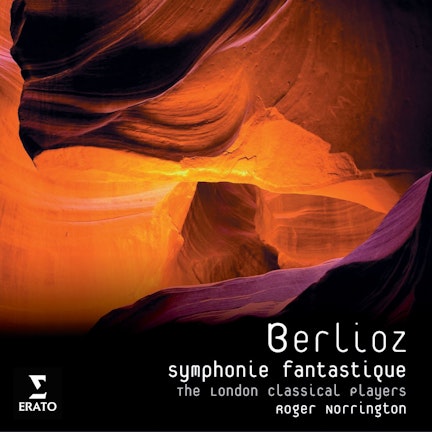
Berlioz's mighty Symphonie fantastique is at once grandly extrovert, and also deeply personal – a side to the work explored by Les Siècles and conductor François-Xavier Roth, who closely studied the composer's autograph score and even recorded the church bells of Berlioz's home town. As ever, they record on instruments historically correct to the 1820s, when the piece was written. It is coupled with the overture to an unfinished opera, Les Francs-juges, some of which Berlioz quotes in his symphony.
Featuring
François-Xavier Roth
Les Siècles
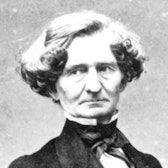
Hector Berlioz
Did you know?
1/7
Interpretation
This recording of Symphonie fantastique by Les Siècles and François-Xavier Roth uses period instruments, reflecting a deep study of the manuscript and Berlioz's revisions.
Compositional Technique
The Symphonie fantastique was revolutionary, introducing instruments previously reserved for opera, giving titles to movements, publishing a program, and using a recurring theme called the 'idée fixe'.
Composition History
Berlioz began composing his Symphonie fantastique in 1830, influenced by Goethe, Shakespeare, Beethoven, and his passion for actress Harriet Smithson.
Composer's Artistic Vision
The Symphonie fantastique, subtitled 'Episode in the Life of an Artist', is an 'opera without words' that follows an artist's love, dreams, and opium-induced nightmares.
Compositional Technique
Berlioz's Symphonie fantastique features unprecedented effects from instruments not usually in the spotlight, such as the harp, oboe, cor anglais, and ophicleide.
Instruments
For the fifth movement, 'Dream of a Sabbath Night', real church bells were used, specially cast by the Berlioz Festival in 2013.
Notable Performances
The Symphonie fantastique achieved great success at its first concert in Paris in 1830 and was a triumph at its second performance in 1832.
You might also enjoy...
Dukas: Symphony in C Major & Polyeucte
Tchaikovsky: Symphony No. 4; Hamlet
Tchaikovsky: Sinfonia No. 6 em Si Menor, Op. 74 - Patética & Abertura 1812, Op. 49
Tchaikovsky: Symphony No. 4: 1812 Overture
Berlioz - Orchestral Works
Berlioz: Le carnaval romain & Symphonie fantastique
Berlioz: Symphonie Fantastique/Le Carnaval Romain
Berlioz: Symphonie Fantastique - Le Carnaval Romain
Rachmaninoff: Symphony No. 3; Rimsky-Korsakov: Russian Easter Festival Overture