This recording was made at the Cité de la Musique – Philharmonie de Paris, in the building designed by architect Christian de Portzamparc.
Composition History
Franz Liszt's transcription of Berlioz's Symphonie fantastique for solo piano in 1834 was the first time a major symphony was transcribed for piano.
Composer Biography
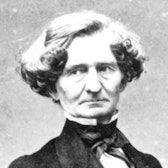
Hector Berlioz, the composer of Symphonie fantastique, never played the piano and did not conceive his orchestral music from a piano perspective.
Compositional Technique
Berlioz's Symphonie fantastique broke from classical symphonic form and revolutionized orchestration by optimally using chromatic possibilities of timbres and nuances.
Instruments
The album features a rare 1928 Pleyel 'vis-à-vis' piano, which is part of the collection of the Musée de la Musique in Paris.
Instruments
The Pleyel 'vis-à-vis' piano, designed for two players facing each other, allows for a homogeneous sound that would be difficult to achieve with two separate instruments.
Interpretation
Jean-François Heisser's transcription for two pianos aims to clarify polyphony, experiment with combined timbres, and benefit from independent pedaling, offering a more analytical vision than a single piano.
You might also enjoy...
Riotte: Météorite et ses métamorphoses
M i n i m a l Bach
Mikael Ayrapetyan: A Whole in Twelve
Shostakovich: Symphony No. 4 (Arr. for 2 Pianos)
Nyvang: Movements for A Monument To the Loneliness of Our World
Scharwenka: Piano Music, Vol. 2
Visions (Complete Books of Rhapsodies and Fantasias)